India rewards the curious. For decades, the Golden Triangle — Delhi, Agra, and Jaipur — has served as the starting point for first-time and returning visitors alike, and rightly so. These three cities contain some of the most celebrated monuments on earth, a depth of Mughal and Rajput history that takes more than a single visit to absorb, and a hospitality culture that makes even a short trip feel genuinely immersive. But India is vast, and the Golden Triangle barely scratches the surface.
Two destinations in particular — Khajuraho and Varanasi — change the character of a Golden Triangle tour with Khajuraho and Varanasi in ways that are hard to articulate until you’ve experienced them. One is a remote cluster of medieval temples whose stone carvings have astonished visitors for centuries. The other is one of the oldest continuously inhabited cities in the world, where spiritual life plays out openly along the banks of the Ganges every single day. Together, they transform a great tour into a journey that touches something deeper.
Why Go Beyond India’s Classic Golden Triangle?
The standard Golden Triangle covers a lot of ground in terms of history and spectacle. But all three cities — Delhi, Agra, and Jaipur — share a broadly similar Mughal and North Indian heritage tradition. They are also well-traveled, well-served by tourist infrastructure, and sometimes, during peak season, genuinely crowded.
Khajuraho and Varanasi offer something different in kind, not just degree. Khajuraho presents pre-Mughal India: medieval Hindu and Jain temple architecture of extraordinary refinement, set in a quiet town that feels wonderfully unhurried compared to the main Golden Triangle cities. Varanasi offers a window into a living spiritual tradition that is thousands of years old — a city where the rhythms of Hindu religious life are not confined to temples but play out along miles of riverfront ghats, in morning rituals, in the great evening Ganga Aarti ceremony, and in the steady movement of pilgrims who have been coming here since antiquity.
For the culturally curious luxury traveler, adding these two destinations turns a sightseeing itinerary into something closer to a genuine cultural education.
Discover the Golden Triangle: Delhi, Agra and Jaipur
Delhi
India’s capital is a city of layers — Mughal mosques and British colonial buildings sitting alongside a thriving contemporary metropolis. Key sights include the Red Fort, built by Shah Jahan in the seventeenth century; the Qutb Minar complex, a UNESCO World Heritage Site dating from the twelfth century; Humayun’s Tomb, the architectural predecessor to the Taj Mahal; and the vast congregational Jama Masjid. Delhi also rewards exploration of its markets — from the spice traders of Khari Baoli to the boutiques of Khan Market — and its neighborhood restaurants. Plan for two full days minimum to do the city justice.
Agra
Agra is home to the Taj Mahal, which needs little introduction, but also to Agra Fort — a formidable red sandstone complex that served as the principal Mughal seat of power before Delhi — and the abandoned Mughal city of Fatehpur Sikri, a remarkable UNESCO-listed site roughly forty kilometers away. Arrive at the Taj at dawn if you possibly can; the early light and relative quiet of that hour make the experience significantly more contemplative than a midday visit. A full day in Agra works well, with a second half-day for Fatehpur Sikri if your schedule allows.
Jaipur
The “Pink City” of Rajasthan was founded in 1727 by Maharaja Jai Singh II and remains one of India’s most photogenic destinations. The Amber Fort, on a hillside above the city, is the most dramatic of the major sites, with elaborately decorated halls and a long prospect over the surrounding landscape. The City Palace — parts of which remain a royal residence — the Jantar Mantar astronomical observatory, and the iconic Hawa Mahal (Palace of Winds) are among the other highlights. Jaipur also has some of the best craft shopping in India: block-printed textiles, blue pottery, gemstone jewelry, and leather goods. Budget two days to explore comfortably.
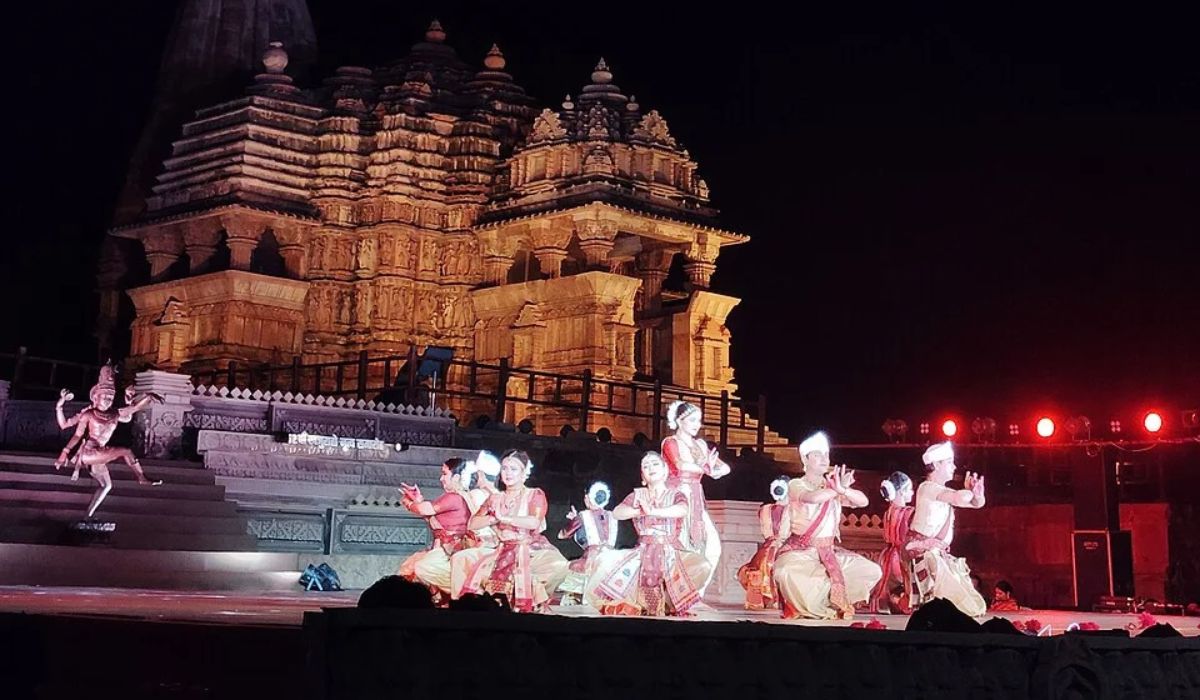
Khajuraho: A Journey into India’s Temple Architecture
About four hundred kilometers southeast of Agra — most efficiently reached by short domestic flight — lies Khajuraho, a small town in the Madhya Pradesh state that contains one of India’s greatest concentrations of medieval temple architecture. The Khajuraho Group of Monuments is a UNESCO World Heritage Site, recognized for the extraordinary quality and ambition of its tenth- and eleventh-century Chandela dynasty temples.
Of the original eighty-five or so temples built during the Chandela period, around twenty-five survive in reasonable condition. They are divided into three groups — the Western, Eastern, and Southern groups — of which the Western Group, enclosed within a well-maintained garden complex, is the most celebrated and the most accessible for a first visit.
The Carvings
The temples are famous worldwide for their exterior sculptural programs, which include depictions of celestial beings (apsaras and suras), mythological narratives, scenes of daily medieval life, and — the aspect that has attracted the most attention — a series of erotic carvings (mithuna figures) representing human love and desire. These carvings represent only a portion of the sculptural decoration overall, but they are executed with a refinement and expressiveness that places Khajuraho among the great achievements of world sculpture.
Scholars have offered various interpretations of the erotic panels — as tantric symbolism, as representations of worldly life to be left behind at the temple threshold, or as a celebration of kama (love and desire) as one of the four aims of human life in Hindu thought. Whatever their intended meaning, they are executed with humanity and skill rather than sensationalism, and a good guide brings considerable depth to their explanation.
Practical Sightseeing
One full day allows time to explore the Western Group thoroughly and visit at least one of the Eastern Group sites (which include several elegant Jain temples). A second day enables a more relaxed pace, with time for the Sound and Light Show held at the Western Group temples in the evening, which provides historical context in an atmospheric setting. Explore Khajuraho’s historic temples alongside the rest of this extended circuit for the full picture.
Varanasi: Spiritual Traditions Along the River Ganges
If any place in India is likely to leave a lasting impression, it is Varanasi. One of the oldest continuously inhabited cities in the world — its history of settlement along the Ganges stretches back at least three thousand years, and possibly much further — Varanasi is considered by devout Hindus to be one of the most sacred places on earth. It is a city of pilgrimage, of learning, of music and silk weaving, and of an unbroken spiritual tradition that takes place entirely in the open, visible to any respectful visitor.
The Ghats
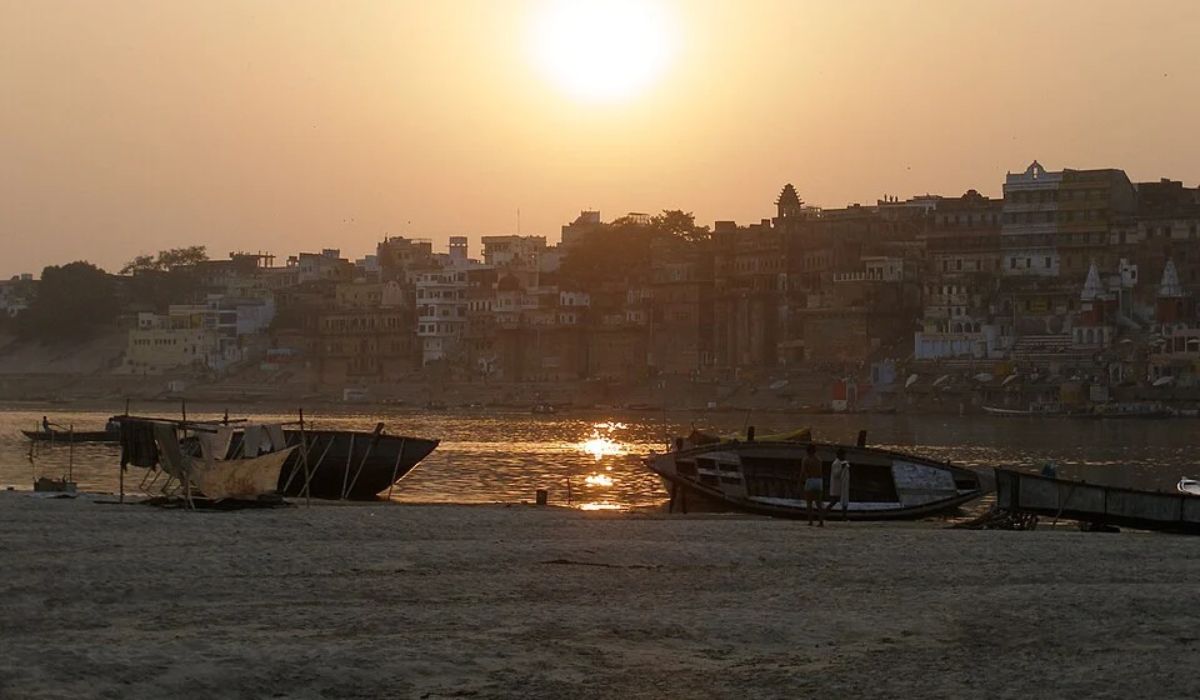
The ghats — stone steps descending to the river — are the social and spiritual heart of Varanasi. There are roughly eighty-four named ghats along the Ganges here, each with its own character and associations. Dasaswamedh Ghat is the most active, the site of the main evening Ganga Aarti. Manikarnika Ghat, one of the principal cremation sites, is a deeply significant place in Hindu belief — the rites conducted here are considered to bring liberation from the cycle of rebirth, and families travel from across India to carry out last rites for loved ones here.
Walking the ghats — either early in the morning or in the evening — is one of the most vivid travel experiences India has to offer. The riverfront is simultaneously a bathing place, a laundry, a space for yoga and meditation, a venue for religious ceremony, a place of business, and a neighborhood thoroughfare.
Ganga Aarti
Every evening at Dasaswamedh Ghat, a group of young priests performs the Ganga Aarti, a fire offering to the river goddess. The ceremony involves large oil lamps, incense, flowers, and chanting, and it draws large numbers of worshippers and visitors each night. It is best experienced from a boat on the river, which offers an unobstructed view and a respectful distance. Arriving by boat also gives a sense of the Varanasi waterfront as a whole, which is difficult to appreciate from the ghats themselves.
Sunrise on the River
A boat ride along the Ganges at dawn — before the full light of day arrives, while morning mist still sits over the water and the ghats are already alive with worshippers beginning their daily rituals — is one of those experiences that few travelers who have done it ever forget. It is quiet, unhurried, and genuinely moving. Discover Varanasi’s spiritual heritage as part of a thoughtfully planned private itinerary.
Visitor Etiquette
Varanasi is a place of living religious practice, not a museum. Visitors are generally welcome to observe, but respectful conduct is important: dress modestly (covering shoulders and knees), ask before taking photographs of individuals or cremation areas, and follow the lead of any guide regarding appropriate behavior near active ceremonies. A knowledgeable local guide is genuinely valuable here — not just for logistical navigation of the ghats, but for the cultural and historical context they provide.
How to Combine Khajuraho and Varanasi with the Golden Triangle
The extended five-destination itinerary — Delhi, Agra, Jaipur, Khajuraho, and Varanasi — is geographically coherent but requires some thought to sequence efficiently.
A typical approach:
- Delhi → Agra → Jaipur: by road or rail, this forms a logical initial circuit in Rajasthan and Uttar Pradesh.
- Jaipur → Delhi → Khajuraho: a short domestic flight from Delhi to Khajuraho (or from Jaipur via Delhi) is by far the most practical option, as the road distance between Jaipur and Khajuraho is substantial. Khajuraho has its own domestic airport (Khajuraho Airport, code HJR) with regular connections to Delhi and Varanasi.
- Khajuraho → Varanasi: the most comfortable option is the direct flight between the two cities, which takes under an hour. There is also a train connection, the Khajuraho–Varanasi Express, which takes several hours — suitable for those who enjoy train travel and wish to see the Madhya Pradesh/Uttar Pradesh countryside en route.
- Varanasi → Home: Varanasi has an international airport (Lal Bahadur Shastri International Airport) with connections to major Indian cities and some international routes, making it a convenient final destination before departure.
Always verify current flight schedules and train timetables when planning, as services and timings change. A specialist travel planner can handle these logistics and build in appropriate buffer time at each destination.
This is the core structure of Lewis and Clark Tours’ Golden Triangle tour with Khajuraho and Varanasi — a carefully sequenced private itinerary that eliminates the logistics headaches while ensuring the best available time at each destination.
How Many Days Do You Need?
A comfortable itinerary covering all five destinations requires a minimum of twelve to fourteen days in India, and fifteen to seventeen days if you prefer a genuinely relaxed pace.
Here is a suggested allocation:
| Destination | Minimum Days | Recommended Days |
|---|---|---|
| Delhi | 2 | 2–3 |
| Agra (+ Fatehpur Sikri) | 1.5 | 2 |
| Jaipur | 2 | 2–3 |
| Khajuraho | 1.5 | 2 |
| Varanasi | 2 | 2–3 |
The most common mistake travelers make with India itineraries is underestimating travel time between destinations and overestimating how much can comfortably be done in a single day, particularly in warm weather. A few days of unhurried sightseeing — time to linger over lunch, revisit a site at a different hour, or simply wander — makes for a far more satisfying experience than a succession of rushed half-days.
If your time is genuinely limited, prioritize quality over quantity. A ten-day trip covering Delhi, Agra, Jaipur, and Varanasi (skipping Khajuraho or saving it for a return visit) is a better experience than a ten-day trip trying to squeeze in all five.
What Makes This a Luxury India Tour?
The difference between a standard tour and a personalised luxury India tour is not simply about the hotel category. It is about how the entire journey is structured.
Private Transport Throughout
Traveling between and within cities by air-conditioned private vehicle — with a driver who knows the roads and can adjust the day’s schedule as needed — is far more comfortable than shared transfers or navigating local transport independently. It also allows for spontaneous stops: the roadside tea stall, the village market, the unexpected viewpoint.
Expert Local Guides
At each destination, a knowledgeable private guide makes an enormous difference to what you understand and absorb. At Khajuraho, a guide who can explain the sculptural iconography and temple architecture in depth turns a beautiful but potentially puzzling site into a coherent and fascinating story. In Varanasi, a guide who knows the ghats and can provide genuine cultural and historical context — and who knows when and where to be to witness the right ceremonies at the right moments — is worth every rupee.
Accommodation
India’s luxury accommodation sector has evolved considerably in recent decades, and all five cities on this route offer quality options. Heritage hotels — converted palaces, havelis, and forts, particularly in Jaipur and Delhi — offer atmosphere that international hotel brands cannot replicate. In Varanasi, boutique properties overlooking the Ganges or in the old city provide a genuinely immersive base. In Khajuraho, the choice is smaller but well-suited to a two-night stay.
Flexibility
Good luxury travel is organized but not rigid. Building in free afternoons, optional excursions, and the ability to shift the day’s program in response to energy levels or weather is the mark of a well-designed itinerary.
Best Time to Visit Khajuraho and Varanasi
October to March is the most comfortable period for all five cities on this route. Temperatures are pleasant (particularly November through February), the skies are generally clear, and the landscape after the monsoon is lush and green. This is also peak tourist season, which means that popular sites — especially the Taj Mahal and the Varanasi ghats during major festivals — can be busy. Book well in advance if traveling between October and January.
November to February is the optimal window for comfort. December and January can bring cool evenings in Delhi and Jaipur, so pack a light layer.
February and March bring the festival of Holi (dates vary by year), which is a remarkable experience in cities like Varanasi and Jaipur — colorful, energetic, and celebrated with great enthusiasm. Logistics become more complex around the festival, but for travelers who embrace it, Holi is one of India’s great spectacles.
April through June brings increasingly intense heat, particularly in Delhi, Agra, and Jaipur, where temperatures regularly exceed 40°C (104°F). Khajuraho and Varanasi are similarly hot. Travel is possible but requires careful planning, early morning sightseeing, and midday rest.
July through September is the monsoon season. Rain is frequent and sometimes heavy, particularly in August. The landscape is dramatically green and tourism numbers are lower, but outdoor sightseeing becomes less predictable. Some travelers specifically seek out the monsoon for its atmosphere and reduced crowds.
Practical Tips for Planning Your Journey
Book in advance. Peak season accommodation at quality properties, particularly in Jaipur and Varanasi, fills quickly. Domestic flight routes like Delhi–Khajuraho can have limited availability. Plan and confirm key bookings at least two to three months ahead for October to January travel.
Dress modestly for temple and religious sites. At Khajuraho’s temples, covered shoulders and knees are expected. At Varanasi’s ghats and any active place of worship, the same applies. Carry a lightweight scarf or shawl for flexibility.
Carry cash for small transactions. While credit cards are widely accepted in hotels and upmarket restaurants, cash is useful at smaller shops, local eateries, and for tipping guides and drivers.
Photography etiquette. At the Khajuraho temples, photography is generally permitted of the architecture and carvings. In Varanasi, always ask before photographing individuals, and be particularly discreet around the cremation ghats.
Health and water. Drink only bottled or filtered water throughout the journey. Your hotel will provide this; carry a reusable bottle from home to reduce plastic waste where refill options are available.
Pace yourself. India rewards unhurried engagement. The temptation to fill every hour with sightseeing is understandable, but the most memorable moments of many India trips happen during the unscheduled hours — a conversation with a guide, an unplanned detour through an old quarter, a quiet evening on a hotel terrace.
Frequently Asked Questions
Q1. Can Khajuraho and Varanasi be combined with the Golden Triangle tour? Yes, and it works very well as an extended itinerary. The most practical sequence is Delhi–Agra–Jaipur, then fly from Delhi to Khajuraho, and finally fly or take the train from Khajuraho to Varanasi. This avoids backtracking and keeps travel time manageable.
Q2. How many days are needed for a Golden Triangle tour with Khajuraho and Varanasi? A minimum of twelve to fourteen days is recommended for all five destinations at a comfortable pace. Fifteen to seventeen days allows for a more relaxed experience, with time to absorb each place properly rather than rushing between them.
Q3. What is the best way to travel between Khajuraho and Varanasi? A short domestic flight (under one hour) is the most comfortable and time-efficient option. A direct train also operates between the two cities for those who prefer rail travel. Always verify current schedules before booking, as services and timings are subject to change.
Q4. What makes Khajuraho’s temples unique? The Khajuraho temples represent the peak of Chandela dynasty craftsmanship from the tenth and eleventh centuries. They are celebrated both for the sophistication of their shikhara (tower) architectural style and for their remarkably detailed stone carvings, which include erotic mithuna figures alongside depictions of celestial beings, mythological scenes, and everyday medieval life. The UNESCO World Heritage Site recognition reflects their outstanding universal cultural value.
Q5. What should visitors know before attending the Ganga Aarti in Varanasi? The Ganga Aarti at Dasaswamedh Ghat takes place every evening and is one of India’s most atmospheric ceremonies. It is best viewed from a boat on the river rather than the crowded ghats. Arrive early to secure a good position. Dress modestly, be respectful of worshippers (who are participating in genuine religious ritual rather than performing for tourists), and follow your guide’s instructions regarding photography and behavior. The ceremony runs for approximately 45 minutes.
Q6. What is the best time of year to take this extended India tour? October through March offers the most comfortable conditions. November through February is the optimal period for weather and sightseeing comfort. February and March bring the Holi festival, which is a remarkable addition to the experience. April to June is very hot; July to September is monsoon season with frequent rain but fewer crowds.
Plan Your Luxury Journey Beyond the Golden Triangle
India’s ability to absorb and reward repeated visits is one of its defining qualities — but for a first journey through the subcontinent, a well-crafted extended itinerary covering Delhi, Agra, Jaipur, Khajuraho, and Varanasi gives you the most complete picture of what the country’s historical, architectural, and spiritual traditions have to offer.
This is not a journey that benefits from being rushed or left to last-minute planning. The logistics of a Golden Triangle tour with Khajuraho and Varanasi — coordinating flights, private transfers, quality accommodation, and expert local guides across five distinct cities — reward the kind of careful, personalized planning that a specialist brings.
At Lewis and Clark Tours, we design private, tailor-made India journeys for travelers who want more than a standard itinerary. If you are ready to begin planning your own extended India adventure, explore our India tour experiences for inspiration, or get in touch with our team to start designing something genuinely personal.