Few wildlife experiences rival an Indian tiger safari. Across five states and more than fifty tiger reserves, India protects roughly 75 per cent of the world’s remaining wild tigers — and the country’s finest luxury wildlife lodges place travellers within striking distance of these habitats without compromising on comfort, cuisine, or expert guiding. Ranthambore’s dramatic lake-and-fort terrain, Bandhavgarh’s dense sal forests, Kanha’s sweeping meadows, Pench’s quiet teak canopy, and Tadoba’s open dry-deciduous woodland each offer a distinct safari character. The lodges that serve them range from minimalist Mughal-inspired tented camps to full-service palatial resorts and architect-designed eco-retreats.
This guide compares ten of the best luxury wildlife lodges in India, covering accommodation, safari access, naturalist quality, dining, and what genuinely sets each property apart — so you can match the right lodge to the right reserve and the right kind of trip.
10 Best Luxury Wildlife Lodges in India for Tiger Safaris
| Lodge | Tiger Reserve | State | Accommodation Style | Best For |
|---|---|---|---|---|
| Aman-i-Khás | Ranthambore | Rajasthan | 10 luxury tented pavilions | Ultra-private minimalist luxury |
| The Oberoi Vanyavilas | Ranthambore | Rajasthan | 25 luxury tents | Full-service resort safari experience |
| SUJÁN Sher Bagh | Ranthambore | Rajasthan | 12 tented suites | Conservation-led classic safari camp |
| Mahua Kothi, A Taj Safari | Bandhavgarh | Madhya Pradesh | 12 standalone kutiyas | Intimate wilderness immersion |
| Samode Safari Lodge | Bandhavgarh | Madhya Pradesh | 12 independent villas | Spacious villa-style seclusion |
| Banjaar Tola, A Taj Safari | Kanha | Madhya Pradesh | 18 tented suites (two camps) | Riverside luxury in prime Kanha |
| Kanha Earth Lodge | Kanha | Madhya Pradesh | 12 eco bungalows | Eco-conscious wildlife travel |
| Baghvan, A Taj Safari | Pench | Madhya Pradesh | 12 standalone bungalows | Machan sleep-outs and close gate access |
| Jamtara Wilderness Camp | Pench | Madhya Pradesh | 10 canvas safari tents | Boutique unplugged wilderness |
| Svasara Jungle Lodge | Tadoba | Maharashtra | 12 luxury suites | Tadoba’s closest premium base |
1. Aman-i-Khás — Ranthambore
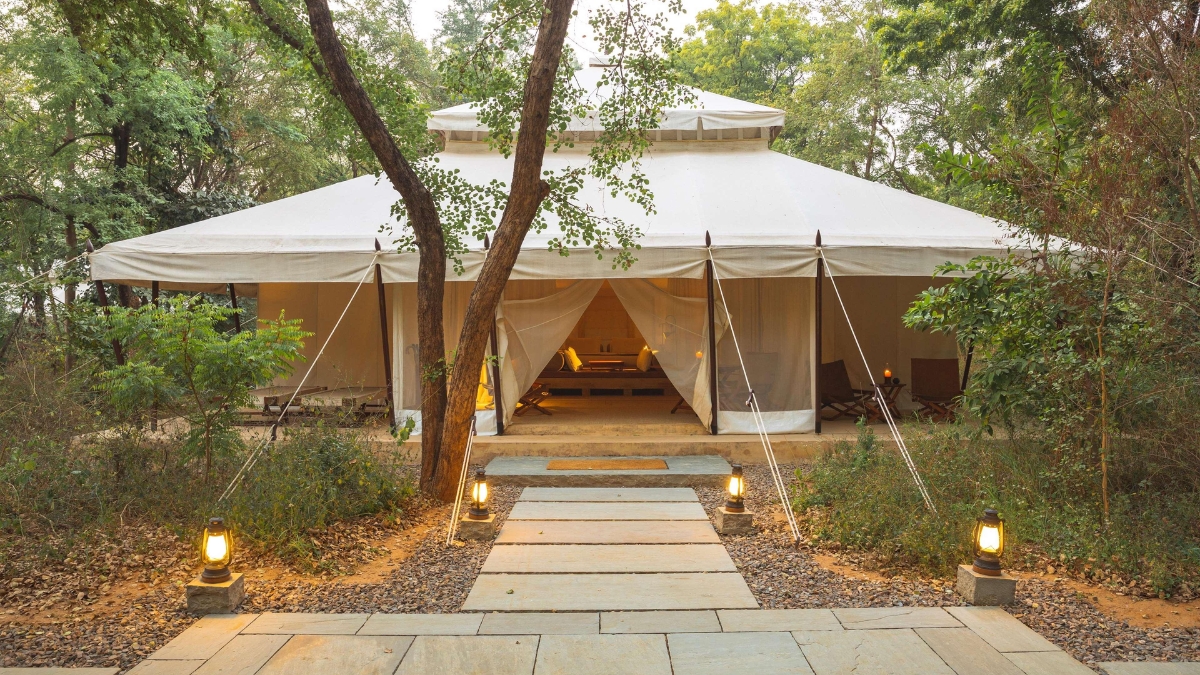
Ten soaring white-canvas pavilions, each over 100 square metres, rise from the Aravalli scrubland on the fringes of Ranthambore National Park. Designed by Jean-Michel Gathy, the camp draws on the aesthetic of Mughal travelling courts — interior spaces are divided by sheer cotton drapes rather than walls, and a sunken marble bathtub anchors each bathroom. With only ten guest tents, Aman-i-Khás operates at one of the lowest guest densities of any luxury tiger safari lodge in India.
Twice-daily game drives head into Ranthambore’s core zones in open 4×4 vehicles, accompanied by resident naturalists. Back at camp, a dedicated spa tent offers Ayurvedic treatments, and a sandstone stepwell-style swimming pool provides a cool retreat between drives. Dining revolves around produce from three on-site organic gardens and dairy sourced from neighbouring village families. Nightly gatherings around the central stone firepit set the camp’s signature social rhythm.
The camp operates seasonally from October through May, closing during the monsoon.
Best for: Travellers who want a hyper-exclusive, design-led tented experience with minimal distractions.
2. The Oberoi Vanyavilas Wildlife Resort — Ranthambore
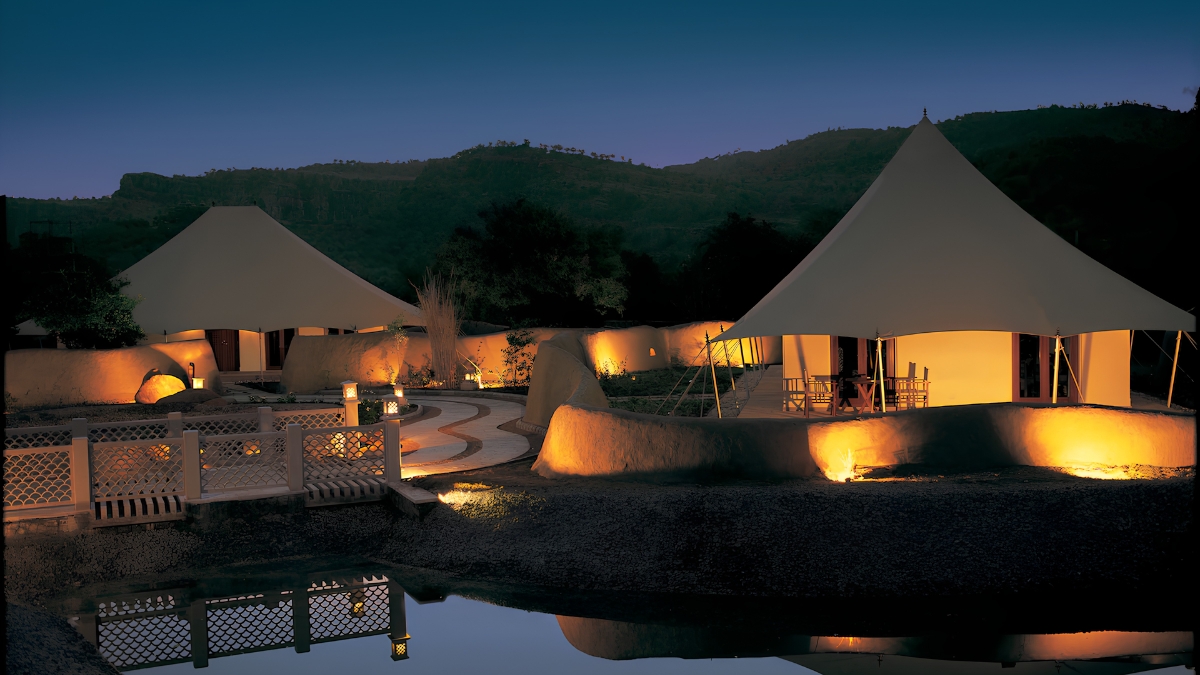
Where Aman-i-Khás strips back, The Oberoi Vanyavilas builds up. Spread across 20 landscaped acres of lily ponds, mango orchards, and manicured lawns, this is a full-service luxury safari resort with 25 royal tented pavilions, a heated outdoor swimming pool, a three-suite Asmi Spa overlooking a lake, a 40-foot observation tower, and a fine-dining restaurant decorated with hand-painted wildlife frescoes.
Tents are spacious — roughly 74 square metres — and come fitted with four-poster beds, claw-foot bathtubs, and walk-in dressing areas. Select tents include private temperature-controlled plunge pools. A dedicated children’s Cub Club runs nature treasure hunts, junior chef sessions, and birdwatching trails, making this one of the stronger choices for families planning a luxury tiger safari in India.
Morning and afternoon safaris into Ranthambore are led by English-speaking in-house naturalists. Winter drives come with blankets, hot-water bottles, and packed breakfast hampers.
Best for: Couples and families wanting polished five-star service alongside serious safari access.
3. SUJÁN Sher Bagh — Ranthambore
SUJÁN Sher Bagh runs deeper than accommodation. Founded by Jaisal Singh — whose family has been intertwined with Ranthambore’s tiger conservation for over fifty years — the camp channels its revenue directly into anti-poaching operations, a mobile medical unit for surrounding villages, and a partnership with Tiger Watch, the non-profit established by legendary warden Fateh Singh Rathore.
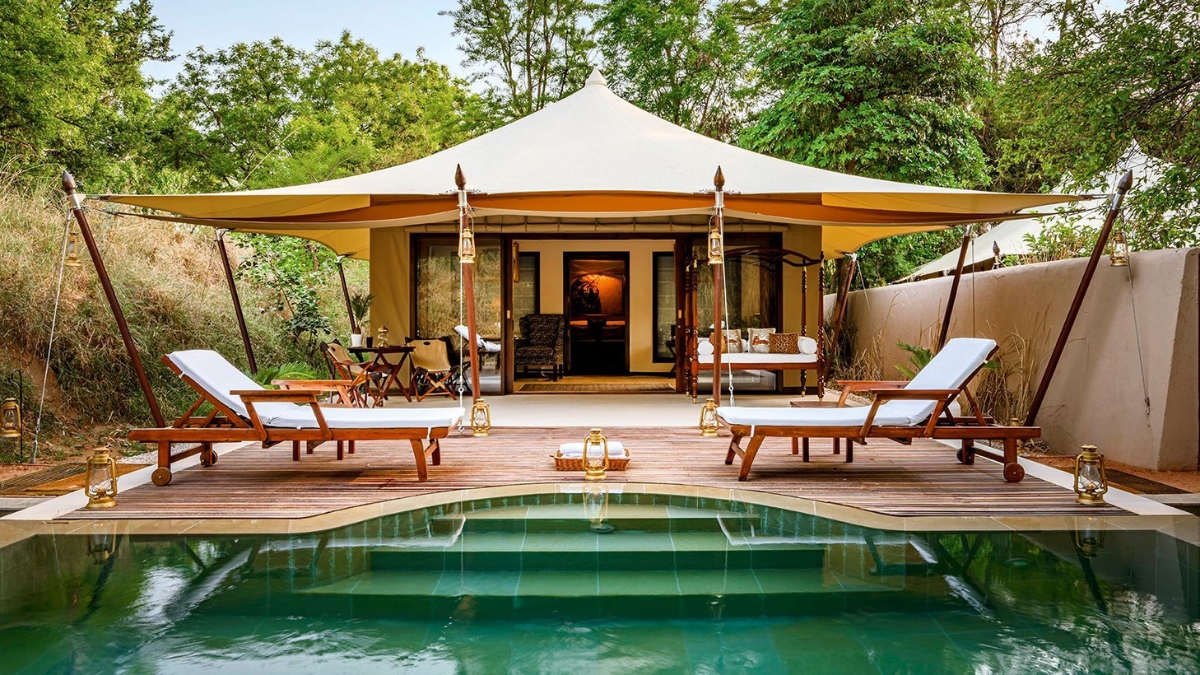
The 12 tented suites evoke a 1920s expedition camp: heavy hand-stitched canvas over timber frames, rosewood campaign furniture, brass fittings, and freestanding bathtubs. Upgraded suites — the Royal Sher and Imperial Raj Bagh — add private heated plunge pools and dedicated butlers. The camp holds Relais & Châteaux membership and accreditation from The Long Run, meeting global standards across conservation, community, culture, and commerce.
Safari guiding here is a standout. The resident naturalist team holds a combined experience exceeding 150 years in Ranthambore’s forests, with deep expertise in feline territorial behaviour and tracking.
Best for: Travellers who want a purpose-led safari where their stay directly supports tiger conservation.
4. Mahua Kothi, A Taj Safari — Bandhavgarh
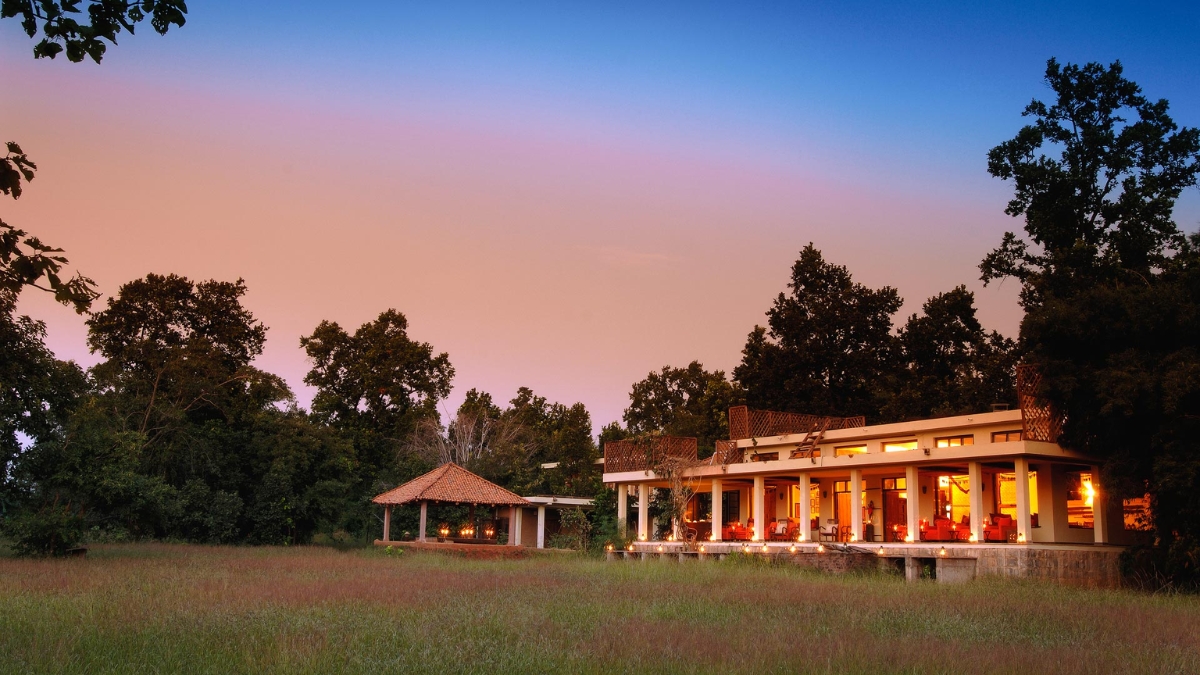
Bandhavgarh’s thick sal forests and ancient cave temples create a markedly different safari landscape from Ranthambore’s open terrain. Mahua Kothi sits on the edge of the park near the Tala Gate, spread across more than 40 acres of private forest and grassland. Its 12 standalone kutiyas — mud-plastered cottages with terracotta roof tiles and Katni stone flooring — are modelled on traditional Baghelkhand village dwellings, but the interiors deliver genuine luxury: king beds, deep freestanding bathtubs, and private courtyards furnished with wooden charpoys.
Operated by Taj Safaris with naturalist training originally developed alongside &Beyond, the lodge runs twice-daily drives into Bandhavgarh’s core zones. A farm-to-table kitchen draws on a productive on-site garden. The signature Mahua Tree Dinner — served under an ancient tree by lantern and firelight — captures the camp’s unhurried rural character. Bicycles parked outside each cottage encourage guests to explore the grounds independently.
Best for: Wildlife travellers seeking an intimate, village-inspired Bandhavgarh experience with Taj-standard guiding.
5. Samode Safari Lodge — Bandhavgarh
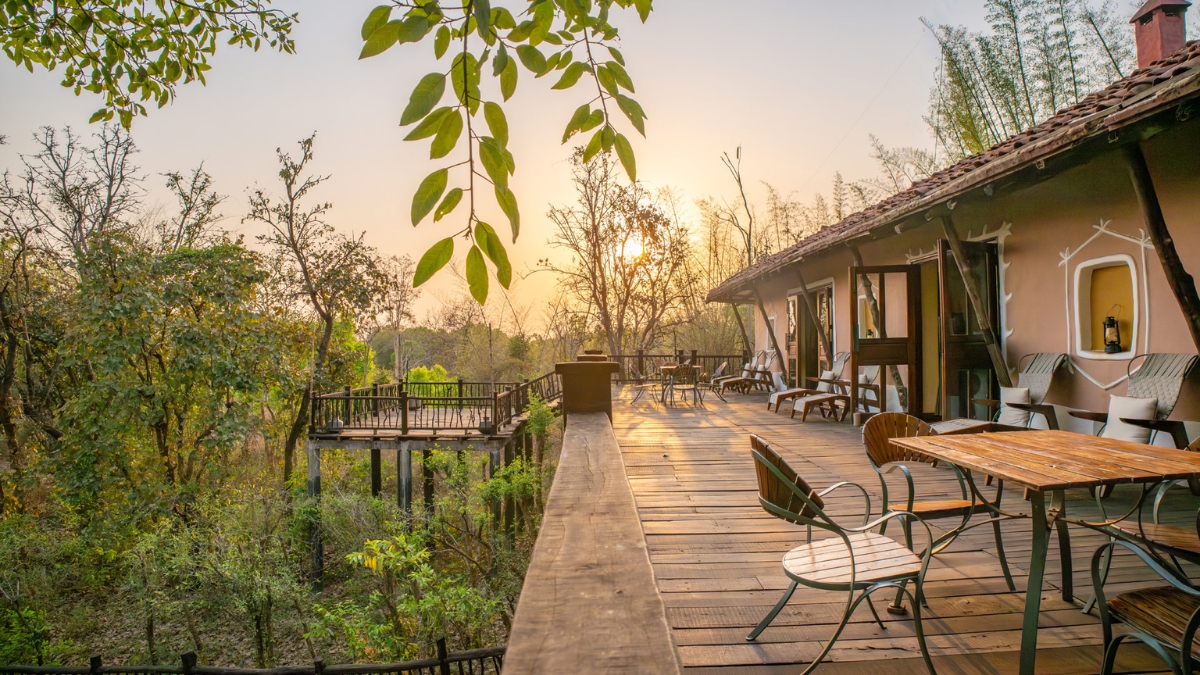
Built on a secluded 35-acre estate adjoining Bandhavgarh’s buffer zone, Samode Safari Lodge takes a deliberately different approach from the busy lodge strip near Tala Gate. The 12 independent villas — designed by Pradeep Sachdeva using sun-dried brick, sal timber, and reclaimed wood — are generously proportioned, each with a separate living room, bedroom, wooden veranda with daybed, and a distinctive open-air bathing courtyard. The main lodge and lounge sit on timber stilts, connected by elevated wooden walkways that leave wildlife corridors undisturbed below.
A heated infinity pool overlooks the surrounding grassland, and a dedicated spa pavilion offers Ayurvedic therapies and a steam room. As a Relais & Châteaux property, the culinary programme is strong, blending traditional Rajasthani recipes (honouring the Samode royal family heritage) with regional central Indian cooking and contemporary international menus.
The villas’ generous footprint makes Samode particularly practical for families — children under five stay free, and the separate living rooms accommodate extra beds without crowding.
Best for: Couples and families wanting spacious, secluded luxury with full resort facilities in Bandhavgarh.
6. Banjaar Tola, A Taj Safari — Kanha
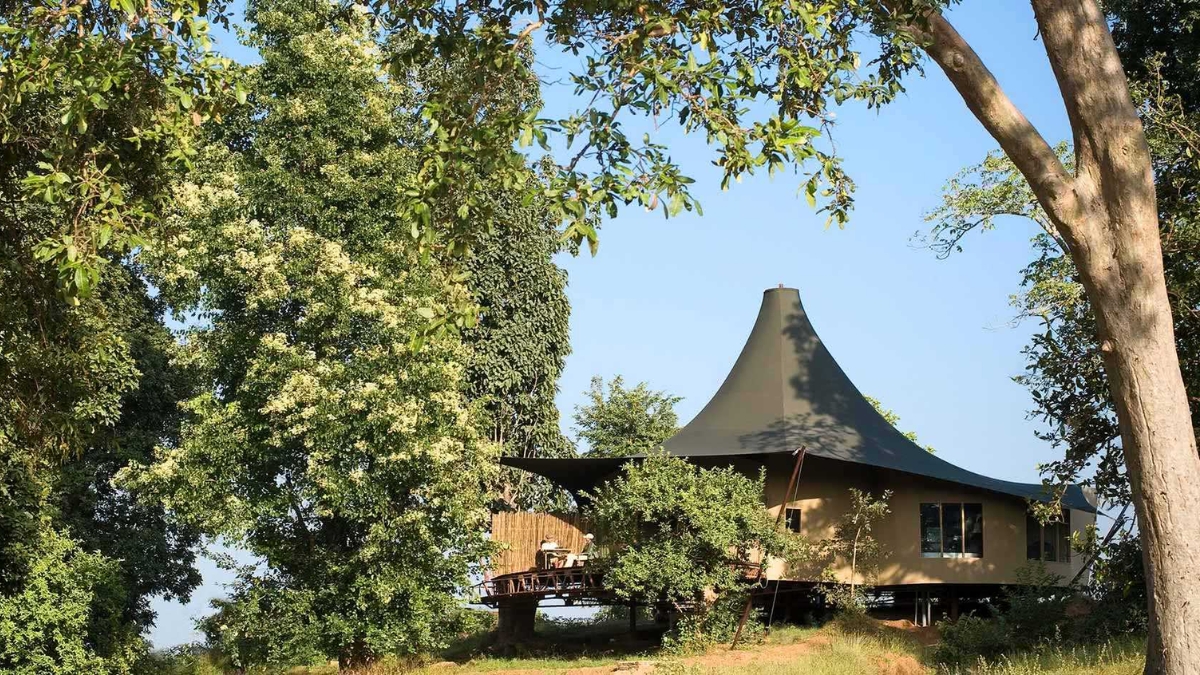
Kanha Tiger Reserve’s expansive meadows and bamboo-fringed sal forests inspired Kipling’s Jungle Book — and Banjaar Tola occupies one of the most coveted positions in the reserve. Set on 90 private acres of sal forest along the Banjaar River, the lodge is barely 2.4 kilometres from Kanha’s Mukki Gate, giving guests one of the shortest transfer times of any luxury safari lodge in central India.
Eighteen tented suites split between two self-contained camps of nine, each with its own lounge, dining deck, and swimming pool. The tents sit on raised platforms with glass-fronted walls and private river-facing verandas. Gond tribal art and Bastar bell-metal accents shape the interior design. The Taj safari lodges naturalist team runs morning and afternoon core-zone drives, bonnet breakfasts inside the park, and guided walks along the riverbed. A dedicated Junior Naturalist programme keeps younger travellers engaged.
Best for: Serious wildlife travellers who want rapid Mukki Gate access and luxury riverside tented accommodation in Kanha.
7. Kanha Earth Lodge — Kanha
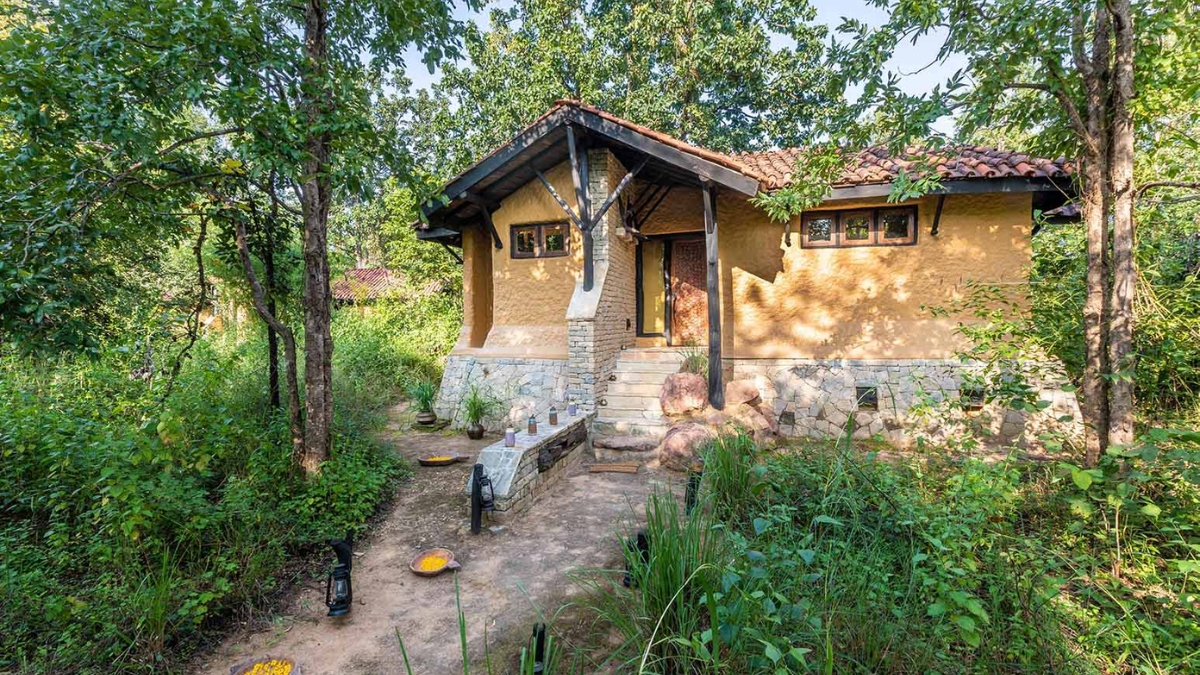
Pugdundee Safaris built Kanha Earth Lodge without felling a single tree. The 12 open-fronted bungalows — roughly 900 square feet each — sit within a 16-acre plot of natural forest near a quiet tribal hamlet, deliberately removed from the commercial lodge strip at the park gate. Architecture follows Gond tribal vernacular: locally quarried stone, mud plaster, handmade terracotta tiles, and all furniture crafted on-site from recycled waste wood. The built footprint occupies less than ten per cent of the property.
This is the lodge for travellers whose priorities extend beyond the safari vehicle. Guided buffer-zone walking trails, birding hikes, cycling expeditions through forest tracks, and sunset hill treks offer a broader engagement with the landscape. Over 75 per cent of staff come from neighbouring Gond and Baiga communities. The lodge holds TOFTigers’ highest “Outstanding” eco-rating and has won India’s Leading Wildlife Resort at the World Travel Awards multiple times.
The trade-off is a 25-to-30-minute drive to Khatia Gate — a consideration for those who prioritise minimal morning transfer times.
Best for: Eco-conscious travellers and birders who want verified sustainability and deep forest immersion.
8. Baghvan, A Taj Safari — Pench
Pench’s quiet teak forests — the other landscape said to have inspired Kipling — attract fewer crowds than Ranthambore or Bandhavgarh, and Baghvan capitalises on that intimacy. Twelve standalone bungalows sit just five minutes from the Turia Gate, each styled with a 1950s colonial safari aesthetic: cream interiors, terracotta roofs, stone floors, and high timber-beam ceilings.
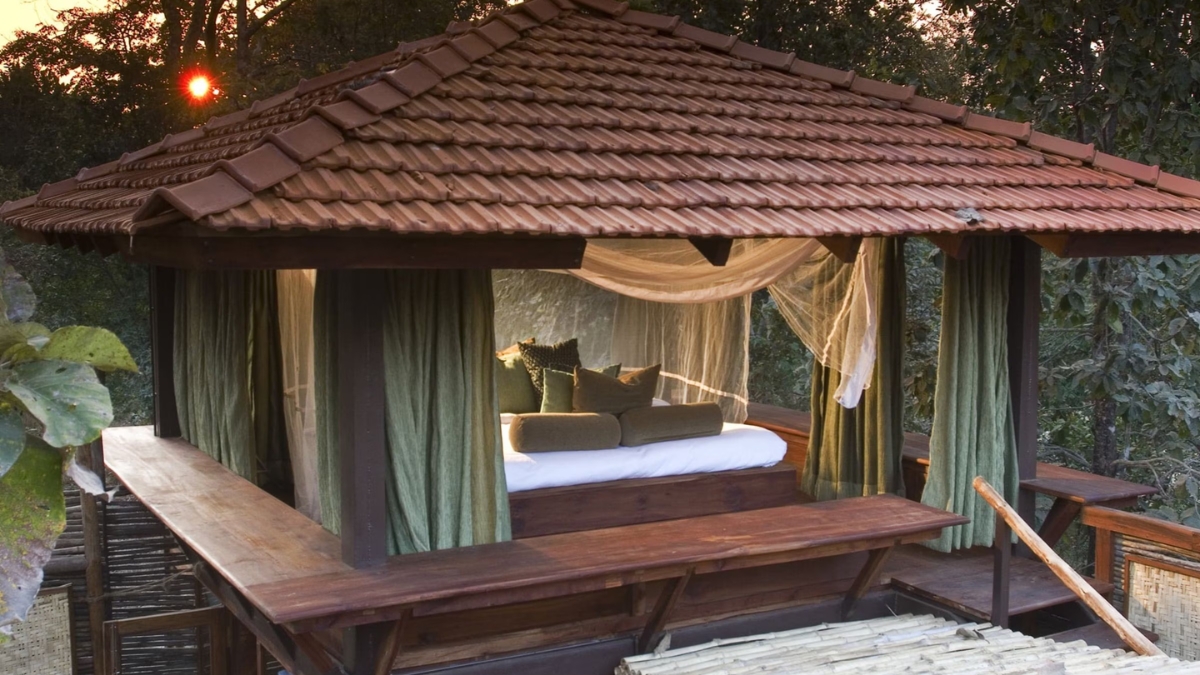
The property’s defining feature is the private rooftop machan built atop every bungalow — a covered observation platform furnished with a daybed, ceiling fan, hurricane lanterns, and mosquito nets. Guests can request to sleep overnight on their machan, drifting off to the sounds of the surrounding forest. The lodge grounds border a seasonal riverbed that serves as an active wildlife corridor, adding an element of unpredictability even between drives.
Taj Safaris’ naturalist team runs twice-daily core and buffer drives, and the lodge also arranges buffer-zone night safaris subject to forest department permits.
Best for: Travellers drawn to Pench’s quieter forests who want a stylish bungalow stay with rooftop machan sleep-outs.
9. Jamtara Wilderness Camp — Pench
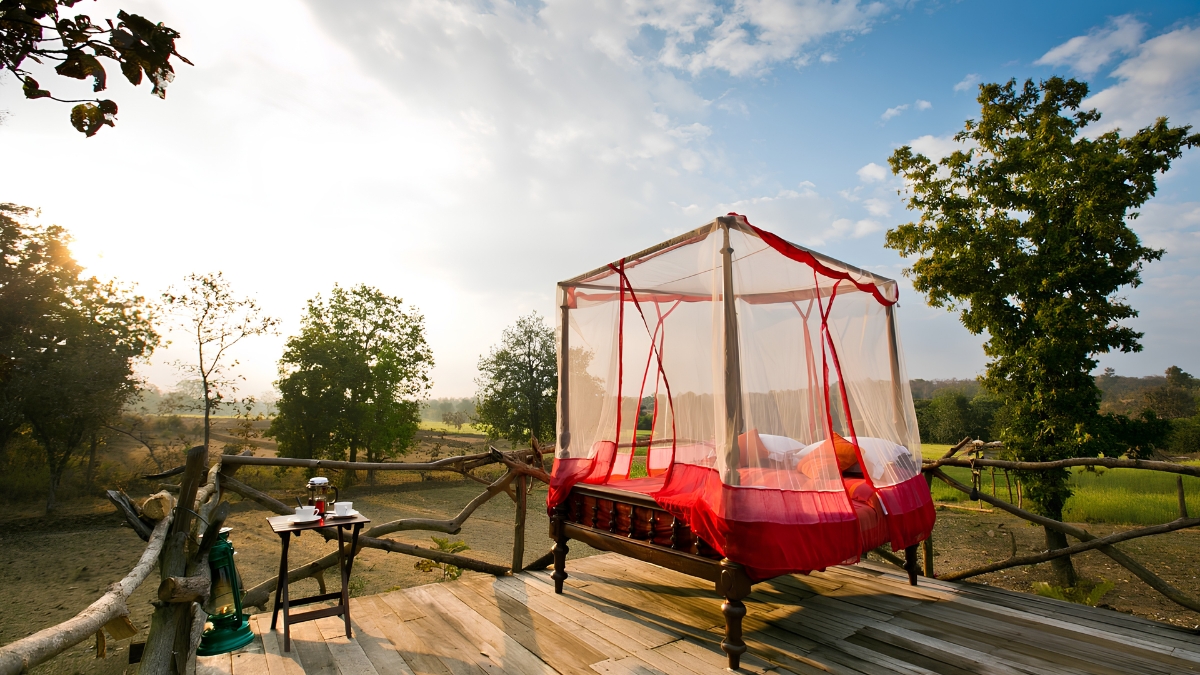
A camp with genuine conservation lineage. Jamtara is owned and run by Amit Sankhala, grandson of Kailash Sankhala — the first director of Project Tiger in 1973, known as the “Tiger Man of India.” That heritage shapes every aspect of the operation, from the demountable tent structures (removed entirely during the monsoon, leaving zero permanent footprint) to the camp’s signature star-bed experience.
Ten luxury canvas tents sit on raised hardwood platforms beneath ancient Arjuna and Mahua trees. There are no televisions and no in-room Wi-Fi — the philosophy is deliberate disconnection. Social life centres on a circular lounge bar built around a magnificent hundred-year-old banyan tree, with evening bonfires and communal dinners lit by hurricane lamps.
The star-bed experience places guests on an elevated open-air platform in neighbouring farmland for an overnight sleep under the sky — and part of the fee goes directly to the local farmer, turning wildlife presence from a crop-raiding liability into household income. Safari access through the secluded Jamtara Gate means fewer vehicles and quieter drives.
Best for: Wildlife photographers and nature purists seeking a low-impact, unplugged camp with conservation pedigree.
10. Svasara Jungle Lodge — Tadoba
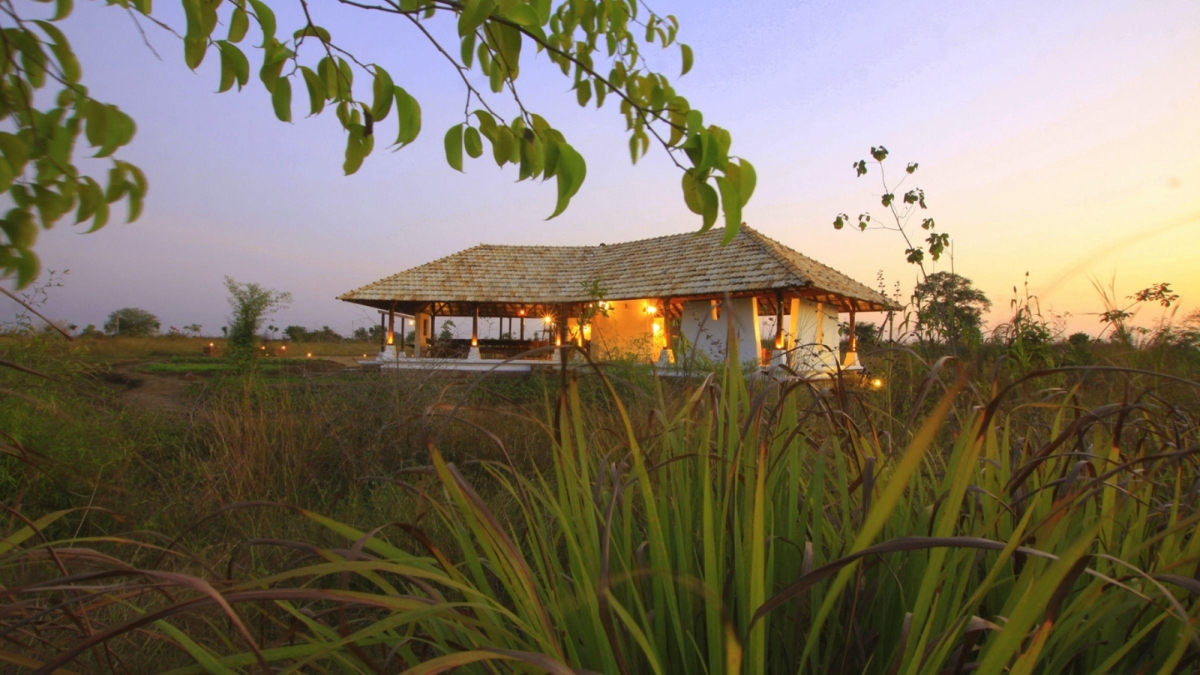
Tadoba-Andhari Tiger Reserve in eastern Maharashtra has emerged as one of India’s most rewarding safari destinations, and Svasara Jungle Lodge sits just 300 metres from the Kolara Core Gate — close enough for guests to be first through when the barrier lifts at dawn. Twelve luxury suites are set within a ten-acre estate that has been actively rewilded with over 4,000 indigenous trees; only about ten per cent of the land is built upon.
The culinary programme is a genuine point of distinction. The open-air Teakhouse dining pavilion serves authentic Varadi cuisine from the Vidarbha region — indigenous spices, slow-cooked lentil gravies, and regional preparations rarely found on safari lodge menus elsewhere in India. Award-winning resident naturalists lead drives and also run on-site nature walks focused on entomology, reptiles, and botany, broadening the wildlife experience well beyond big-cat tracking.
Svasara holds TOFTigers’ highest “Outstanding Practice” eco-rating and employs predominantly from surrounding villages.
Best for: Travellers exploring Tadoba who want ultra-close gate access, regional cuisine, and a rewilded eco-lodge.
Which Tiger Reserve Is Best for a Luxury Tiger Safari in India?
The right reserve depends on your travel route, the time of year, and what kind of landscape excites you. No single park is universally “best” — each offers a different safari character.
Ranthambore
Rajasthan’s most famous tiger reserve combines ruined forts, lakes, and semi-arid woodland. Tigers here are relatively habituated to vehicles, and the dramatic backdrops — a tenth-century hilltop fortress, banyan-fringed lakes — make for striking photography. Ranthambore is also the most accessible reserve from Delhi and Jaipur, making it practical for shorter itineraries or a Luxury Golden Triangle Wildlife Tour that combines India’s cultural highlights with a safari.
Bandhavgarh
Dense sal and mixed-deciduous forest in Madhya Pradesh, with a compact core zone. The terrain is hilly and the vegetation thick, creating a different tracking dynamic from Ranthambore’s open sightlines. A Bandhavgarh tiger safari suits travellers who want a focused, multi-drive wildlife itinerary in central India.
Kanha
Expansive meadows, bamboo groves, and towering sal forests give Kanha a classic central Indian wilderness feel. The reserve is also a stronghold for the hard-ground barasingha (swamp deer), found nowhere else in the wild. Kanha’s size and landscape diversity reward longer stays.
Pench
A quieter, less-visited reserve with dry teak forest and open canopy. Pench draws fewer tourist vehicles, creating a more solitary safari atmosphere. It works well paired with Kanha or Bandhavgarh on a multi-reserve itinerary through Madhya Pradesh.
Tadoba
Maharashtra’s largest and oldest national park features dry-deciduous forest, lakes, and open grassland. Tadoba has gained a strong reputation among serious wildlife travellers and is well connected from Nagpur, making it practical for weekend extensions or standalone trips.
Best Time to Visit India for a Tiger Safari
October to February
Cooler temperatures — particularly pleasant from November through February — make for comfortable game drives. Vegetation is relatively lush early in the season following the monsoon, gradually thinning as winter progresses. This is the most popular period for international visitors, and premium lodges book out early.
March to June
Temperatures rise sharply, especially from April onwards, but the thinning foliage and concentrated water sources draw wildlife into the open. Serious safari travellers and photographers often prefer this period precisely because animals gather around remaining waterholes, increasing the chances of varied sightings. Early morning and late afternoon drives remain manageable; midday heat is intense.
Monsoon Season (July to September)
Most core zones across India’s tiger reserves close during the monsoon for habitat regeneration. Some buffer zones remain accessible on limited schedules, but arrangements vary significantly between reserves and states. Always check the relevant state forest department or reserve authority before planning travel during this period — do not assume uniform opening or closing dates across all parks.
How Many Nights Should You Stay at a Tiger Lodge?
- 2 nights (3–4 safari drives): A brief introduction. Enough to experience the forest and understand the rhythm of a safari morning, but limited opportunity if weather or wildlife movement is uncooperative on a particular day.
- 3–4 nights (5–8 drives): A well-balanced stay for most travellers. Multiple drives across different zones and times of day build a richer picture of the ecosystem — predator-prey dynamics, birdlife, seasonal behaviour — regardless of whether a tiger appears.
- 5+ nights: Suited to dedicated wildlife enthusiasts and photographers. Extended stays allow repeat visits to productive zones, varied light conditions for photography, and time for walking safaris, birding excursions, and cultural visits between drives.
Tiger sightings are never guaranteed because these are wild animals in natural habitats. Multiple drives improve your chances of encountering a range of wildlife, but every outing in the forest has value in its own right.
How to Choose the Right Luxury Wildlife Lodge
1. Distance from Your Safari Gate
The gate or zone your lodge serves determines your morning transfer time. A property five minutes from a gate means an extra twenty minutes of sleep before a 5:30 a.m. departure. Conversely, a more secluded lodge may offer greater tranquillity at the cost of a longer pre-dawn drive.
2. Quality of Naturalists
An experienced naturalist transforms a safari from a vehicle ride into an interpretive experience — reading alarm calls, identifying tracks, explaining territorial behaviour, and contextualising the broader ecology. Ask lodges about the experience and training background of their guiding team.
3. Safari Arrangements
Not every lodge includes safari permits or vehicle charges in the room rate. Clarify whether your booking covers park entry fees, vehicle hire, guide fees, and whether drives are shared with other guests or private. Permit allocation and zone assignment can be complex — lodges with strong local relationships and advance booking systems save considerable hassle.
4. Lodge Size
A ten-tent camp and a 25-tent resort offer fundamentally different atmospheres. Smaller properties tend to deliver more personalised attention and quieter communal spaces. Larger resorts provide broader facilities — swimming pools, spas, children’s clubs, multiple dining venues.
5. Sustainability
Look for verified credentials rather than vague claims. Certifications such as TOFTigers’ PUG eco-rating, membership of The Long Run, or transparent community employment figures signal genuine commitment. Ask whether the lodge supports anti-poaching initiatives, local livelihoods, or habitat restoration.
6. Food and Special Requirements
Most luxury safari lodges in India serve multi-cuisine menus and accommodate vegetarian diets comfortably. If you have specific dietary needs — vegan, gluten-free, Jain — confirm arrangements directly with the lodge before arrival. Several properties maintain their own kitchen gardens and can tailor menus accordingly.
What Does a Luxury Tiger Safari in India Cost?
Costs vary considerably and depend on a combination of factors:
- Lodge category — an intimate eco-lodge and an ultra-luxury tented camp sit at very different price points
- Season — peak winter months (November to February) typically command higher rates
- Room type — a standard tent versus a royal suite with a private pool
- Number of nights
- Safari inclusions — private versus shared vehicle, number of drives, park permit fees, naturalist charges
- Transfers — road transfers from the nearest airport or railway station
- Meals — most luxury lodges operate on full-board or all-inclusive meal plans
- Applicable taxes
Ultra-luxury tented camps at the top end can cost several times more per night than well-regarded boutique eco-lodges. Rather than comparing published rack rates in isolation, request a fully costed itinerary from the lodge or a specialist tour operator based on your travel dates and preferred tiger reserve.
Tips for Booking Your Tiger Safari
- Plan early. Safari permits in popular core zones sell out weeks or months ahead, particularly during peak season (November to March). Early planning gives you the best chance of securing your preferred zones and dates.
- Confirm your safari gate. Different gates access different zones with different terrain and wildlife patterns. Your lodge can advise which gate and zone suit your interests.
- Clarify inclusions. Check whether safaris, permits, vehicle charges, and naturalist fees are included in your lodge package or charged separately.
- Book multiple drives. A single morning drive is a limited sample. Four to six drives across mornings and afternoons give the forest a fair chance to reveal itself.
- Dress in neutral colours. Olive, khaki, brown, and muted greens are ideal. Avoid bright whites, reds, and fluorescent tones that can disturb wildlife and other guests.
- Layer for winter mornings. Open-top vehicles at 6 a.m. in December can be genuinely cold in central and northern India. Carry a warm fleece, scarf, and gloves for the pre-dawn drive.
- Bring binoculars. Even if the lodge provides them, your own pair — ideally 8×42 or 10×42 — makes a significant difference to the experience.
- Follow your guide’s instructions. Stay seated in the vehicle, maintain low voices, and respect all forest department regulations. These rules exist to protect both wildlife and visitors.
- Respect wildlife photography ethics. Never pressure a driver to get dangerously close, block animal movement, or use flash photography. Patient, ethical observation from a respectful distance produces better photographs and better outcomes for the animals.
FAQs About Luxury Tiger Safaris in India
Which is the best luxury wildlife lodge in India for a tiger safari?
There is no single best lodge — the right choice depends on your preferred reserve, budget, travel style, and what you prioritise. For ultra-exclusive tented luxury, Aman-i-Khás and SUJÁN Sher Bagh in Ranthambore set the standard. For full-service resort facilities, The Oberoi Vanyavilas is hard to match. Eco-conscious travellers may gravitate toward Kanha Earth Lodge or Jamtara Wilderness Camp. Families often prefer Samode Safari Lodge or Oberoi Vanyavilas for their generous accommodation and children’s facilities.
Which national park is best for tiger safaris in India?
Ranthambore, Bandhavgarh, Kanha, Pench, and Tadoba are all excellent tiger reserves, each with a distinct landscape and safari character. Ranthambore offers dramatic fort-and-lake backdrops; Bandhavgarh has dense forest and a compact core; Kanha provides sweeping meadows and biodiversity; Pench is quieter and less crowded; Tadoba delivers strong wildlife in Maharashtra’s dry-deciduous woodland. The best park for you depends on your route, available dates, and the kind of forest environment you find most appealing.
Is Ranthambore or Bandhavgarh better for tiger safaris?
Both reserves offer excellent tiger habitat. Ranthambore is more accessible from Delhi and Jaipur, features open terrain that suits photography, and has a wider selection of ultra-luxury lodges. Bandhavgarh’s denser forest creates a more immersive jungle atmosphere and suits travellers focused on dedicated multi-day wildlife itineraries in central India. Many experienced safari travellers visit both over successive trips.
How many safari drives should I book?
A minimum of four drives — two mornings and two afternoons — provides a reasonable introduction. Six to eight drives across three or four days offer a more balanced experience, allowing you to explore different zones and adapt to daily wildlife patterns. Photographers and serious wildlife enthusiasts often book ten or more drives over five-plus nights.
Are tiger sightings guaranteed in India?
No. Tiger sightings are never guaranteed because these are wild animals in natural habitats. Sighting probability depends on season, weather conditions, the safari zone allocated, time of day, and simple chance. Multiple drives improve your likelihood, and skilled naturalists read the forest more effectively — but a guarantee is impossible and any operator claiming otherwise should be treated with caution.
What is the best month for a tiger safari in India?
There is no single best month. November to February offers comfortable temperatures and good visibility as vegetation thins. March to May brings intense heat but concentrates wildlife around water, often improving sighting opportunities. October is pleasant but vegetation is still dense following the monsoon. The right month depends on your heat tolerance, photography goals, and the specific reserve’s seasonal patterns.
How far in advance should I book a tiger safari?
Three to six months ahead is advisable for peak-season travel (November to March) at popular reserves like Ranthambore and Bandhavgarh. Premium lodges and preferred safari zones can sell out well in advance. For travel during April to June, two to three months’ lead time is generally sufficient, though popular lodges still warrant early booking.
Can luxury lodges arrange tiger safaris?
Most luxury wildlife lodges either include safari drives in the room package or arrange them as an add-on. However, inclusions vary: some lodges bundle permits, vehicle, and naturalist fees into an all-inclusive rate, while others charge these separately. Always confirm exactly what is included at the time of booking, and ask whether drives are shared with other guests or private to your party.
Conclusion
India’s luxury tiger safari lodges span a wide spectrum — from the minimalist Mughal elegance of Aman-i-Khás and the conservation-rooted campfire culture of SUJÁN Sher Bagh to the full-resort polish of The Oberoi Vanyavilas and the eco-architecture of Kanha Earth Lodge. Bandhavgarh’s intimate kutiyas at Mahua Kothi and the spacious villas at Samode suit travellers drawn to central India’s dense forests. Pench rewards those seeking quieter safari atmospheres at Baghvan or Jamtara. And Tadoba’s growing reputation finds a strong base in Svasara’s gate-adjacent lodge.
The most rewarding tiger safari holidays in India combine the right reserve with the right lodge, the right number of drives, and the right season. A well-planned itinerary — such as a luxury tiger safari and Taj Mahal tour — tailored to your travel dates, preferred landscapes, and the pace you want, makes the difference between a good trip and a genuinely memorable one.