India has been the world’s quiet teacher of wellness for more than five thousand years. Long before “wellness tourism” became a trend, Ayurveda — the ancient Indian science of life — was already mapping the relationship between the body, the mind, and the natural world. Today, that knowledge lives inside some of Asia’s most thoughtfully designed retreats: places where Panchakarma therapies, herbal medicine, yoga, and mindful nutrition come together with serious hospitality.
Whether you are arriving burnt out from a demanding career, recovering from a health setback, or simply craving a genuine reset, India offers something that few countries can match: depth. The best luxury Ayurveda retreats here are not cosmetic spa add-ons. They are structured wellness experiences guided by qualified Ayurvedic physicians, built around your specific constitution, and designed to create change that lasts well beyond checkout.
This guide covers ten of India’s most respected luxury spa and Ayurveda retreats, a practical framework for choosing the right one, and essential travel advice to help you plan your trip with confidence.
1. Ananda in the Himalayas — Narendra Nagar, Uttarakhand
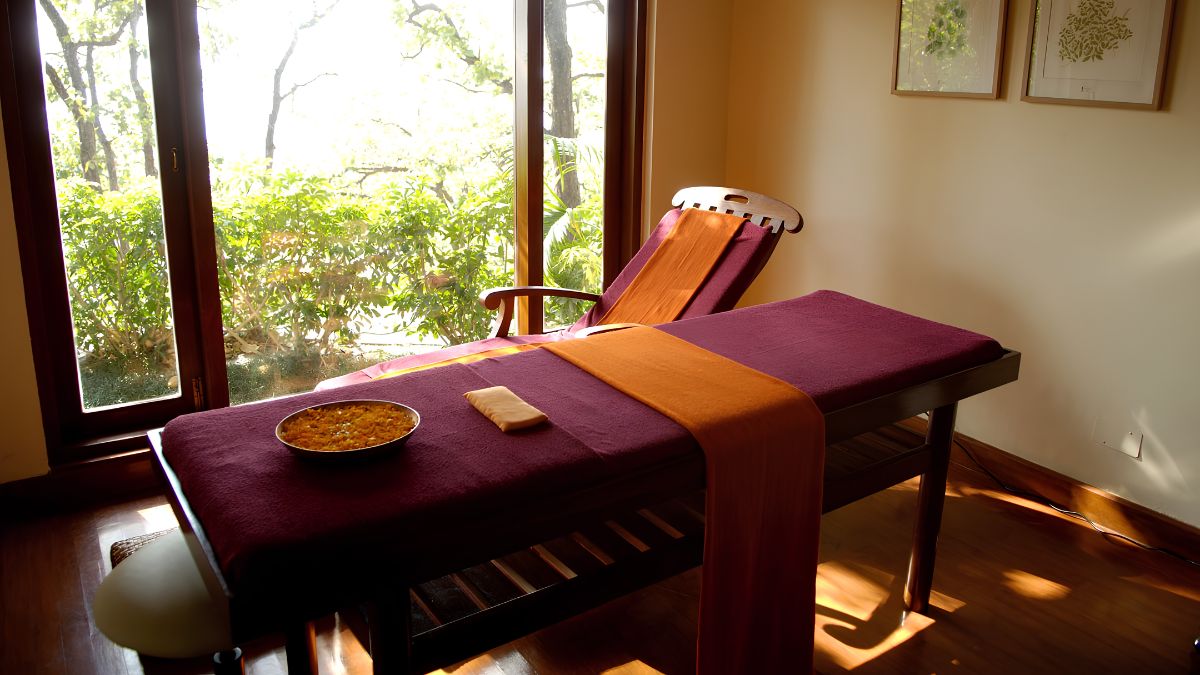
Location: Perched above the sacred Ganges valley in Narendra Nagar, Uttarakhand, roughly 260 km from Delhi.
There are Himalayan wellness retreats, and then there is Ananda. Set within a restored Maharaja’s palace estate with unobstructed views across sal forests and the river below, Ananda has become one of the most consistently respected wellness destinations in Asia. It does not chase trends — it refines what it already does exceptionally well.
The retreat blends classical Ayurveda with Vedanta philosophy and modern integrative medicine. Every guest begins with a consultation with an Ayurvedic doctor who assesses their prakriti (constitution) and current vikriti (imbalance). From there, a personalised programme is created — whether that is a five-day stress management package, a fourteen-day Panchakarma detox, or a longer transformational stay.
The spa facility spans approximately 24,000 square feet and includes dedicated Ayurvedic treatment rooms, hydrotherapy, yoga pavilions, and a meditation hall. Yoga and pranayama sessions are held daily against the backdrop of the Himalayas. The food programme is integral, not optional — guests receive nutrition guidance aligned with their Dosha type.
Accommodation ranges from hillside rooms to a palace suite, all finished to a standard you would expect from one of India’s most refined properties. Service is attentive without being intrusive.
Ideal for: Executives, professionals, or travellers seeking a medically guided Ayurveda or Panchakarma retreat with Himalayan scenery. Best time to visit: March to June and September to November. Suggested stay: 7 to 21 days for meaningful results.
2. Kalari Rasayana — Kollam, Kerala
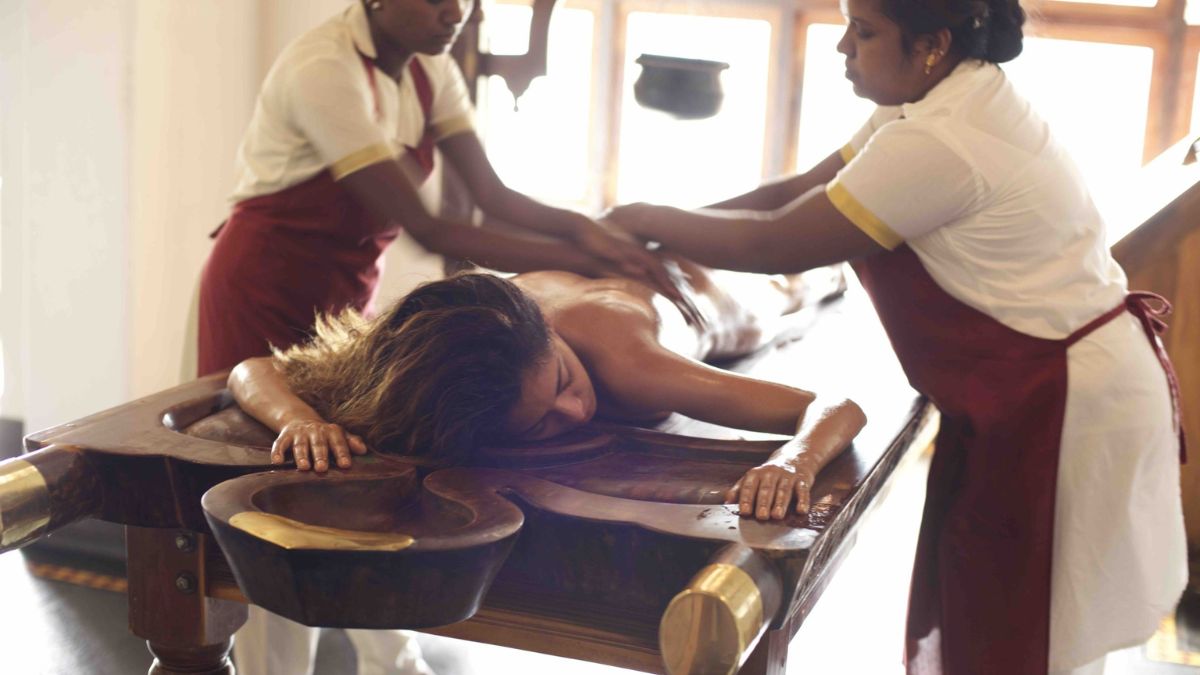
Location: Set along a quiet stretch of the Kerala backwaters near Kollam, about 70 km from Thiruvananthapuram.
If Ananda appeals to the cosmopolitan traveller, Kalari Rasayana speaks to those who want something more rooted. Developed under the guidance of the Kalari Kovilakom heritage, this property is operated by CGH Earth — a group with a long record of thoughtful, ecology-conscious hospitality in Kerala.
Kalari Rasayana is a dedicated Ayurveda retreat, which means it operates differently from a hotel with an Ayurveda menu. Upon arrival, guests surrender their phones (voluntarily, but strongly encouraged), follow a daily schedule prescribed by resident physicians, and commit to a programme that may include traditional Kizhi (herbal bolus therapy), Pizhichil (oil bath), Nasyam, and other classical treatments.
The property is intimate — with a small number of well-appointed suites surrounded by coconut palms and water — and deliberately unhurried. Meals are pure Ayurvedic cuisine prepared fresh daily. There are no restaurants you can wander into for a burger at midnight. That discipline is part of the offering.
Ideal for: Travellers seeking an immersive, medically supervised Ayurveda experience without the distractions of a conventional resort. Best time to visit: June to February. Suggested stay: 14 to 21 days minimum for Panchakarma programmes.
3. Vana Retreat — Dehradun, Uttarakhand
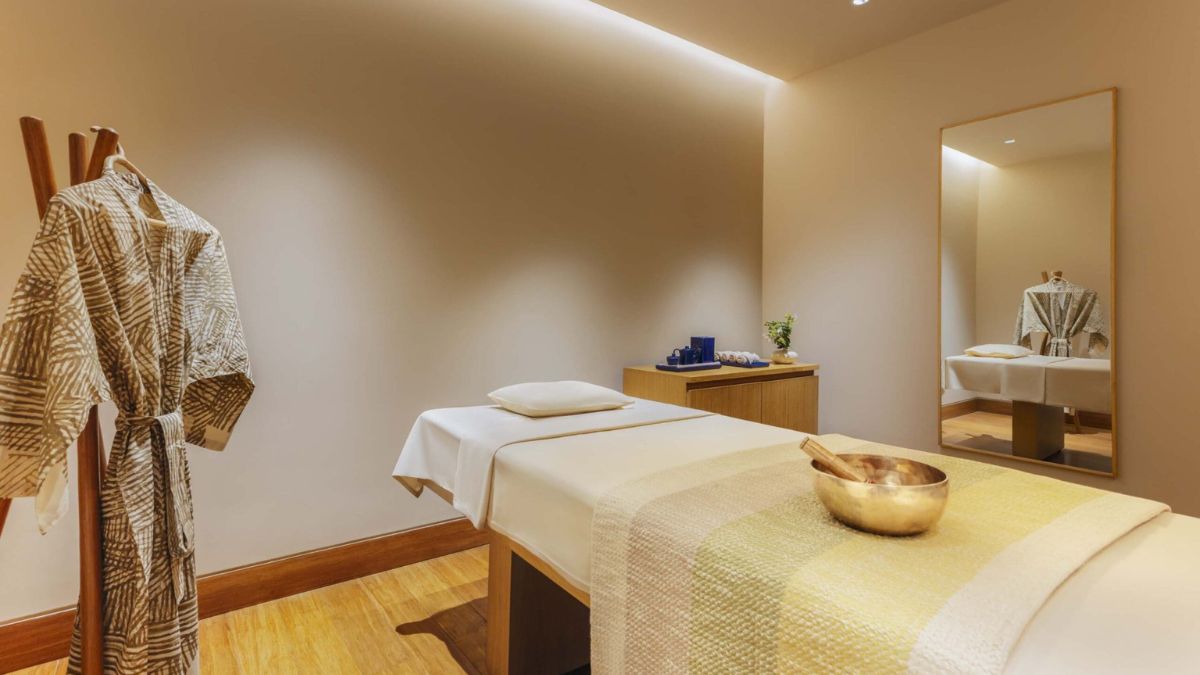
Location: In the forested outskirts of Dehradun, at the base of the Himalayas, approximately 45 minutes from Dehradun airport.
Vana represents a particular kind of Indian wellness luxury — deeply serious, architecturally restrained, and philosophically grounded. It is one of the few retreats in India that integrates Ayurveda, Tibetan Sowa Rigpa medicine, and yoga within a single, coherent framework. Guests are not expected to pick a menu item; they are guided into a programme after thorough wellness consultations.
The 21-acre estate is planted with sal trees and medicinal herbs. The architecture — primarily grey stone and natural wood — is deliberately calm, designed to slow the nervous system before any treatment begins. Rooms and suites are spacious and minimalist, oriented toward the forest rather than a swimming pool.
What sets Vana apart is intellectual rigour. The wellness team includes Ayurvedic physicians, nutritionists, physiotherapists, and yoga teachers who function as a coordinated unit rather than independently. Programmes range from a week-long immersion to extended stays of a month or more.
Food at Vana is considered part of the healing process — not in a punishing way, but thoughtfully. Ingredients are sourced carefully, preparations are dosha-aware, and there is always something genuinely satisfying on the plate.
Ideal for: Discerning travellers who want depth and integration, particularly those drawn to Indian and Tibetan healing traditions. Best time to visit: March to June and October to December. Suggested stay: 7 to 28 days.
4. Somatheeram Ayurveda Resort — Thiruvananthapuram, Kerala
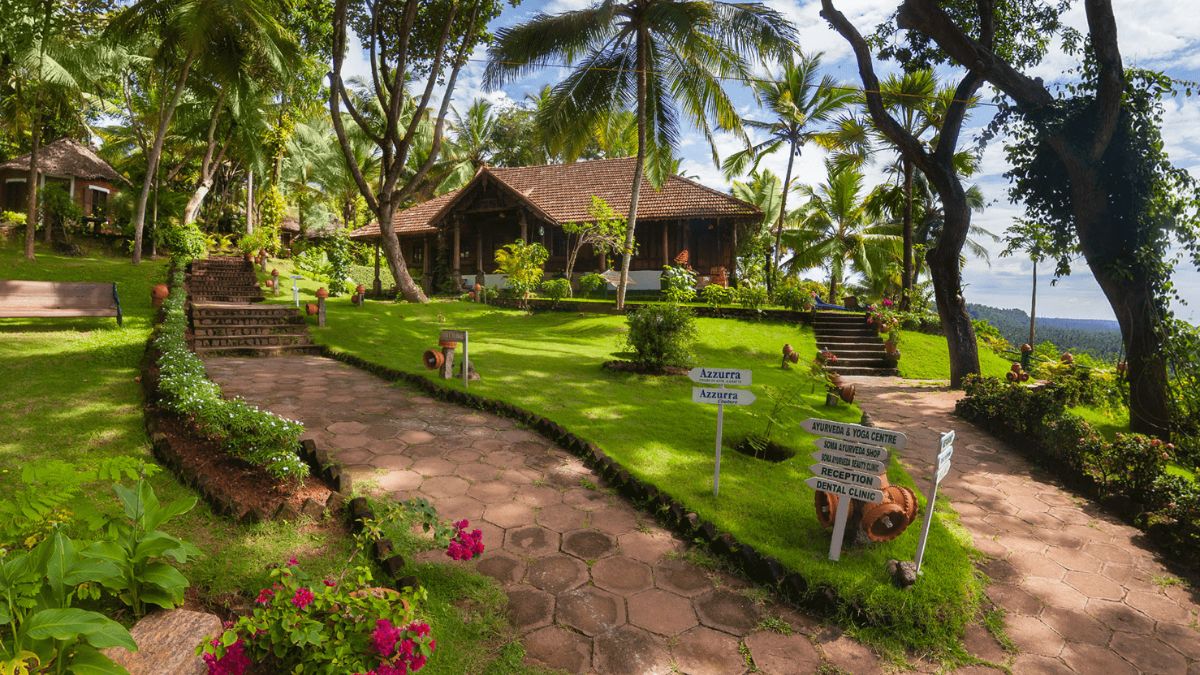
Location: On a cliff above the Arabian Sea, near Chowara Beach, south Kerala.
Somatheeram holds a significant place in the history of Ayurveda tourism in India — it was among the first resorts to formalise traditional Ayurveda as a structured offering for international guests, and it has continued developing its programmes over several decades.
The setting is genuinely beautiful: traditional Kerala-style cottages and villas arranged across a hillside descending to a private beach. The sounds of the ocean accompany every treatment. Unlike some retreats that present Ayurveda as a lifestyle accessory, Somatheeram takes a clinical approach. Resident doctors conduct initial assessments, and guests are placed on programmes ranging from general rejuvenation (Rasayana) to weight management and stress relief.
Treatments use freshly prepared herbal formulations and oils, many produced on-site or sourced from trusted Ayurvedic pharmacies. The resort also offers classical yoga and meditation programmes. For international travellers new to Ayurveda, Somatheeram provides a well-structured introduction without overwhelming complexity.
Ideal for: First-time Ayurveda travellers who want a credible, beach-facing experience. Best time to visit: September to May. Suggested stay: 7 to 14 days.
5. CGH Earth Kalari Kovilakom — Palakkad, Kerala
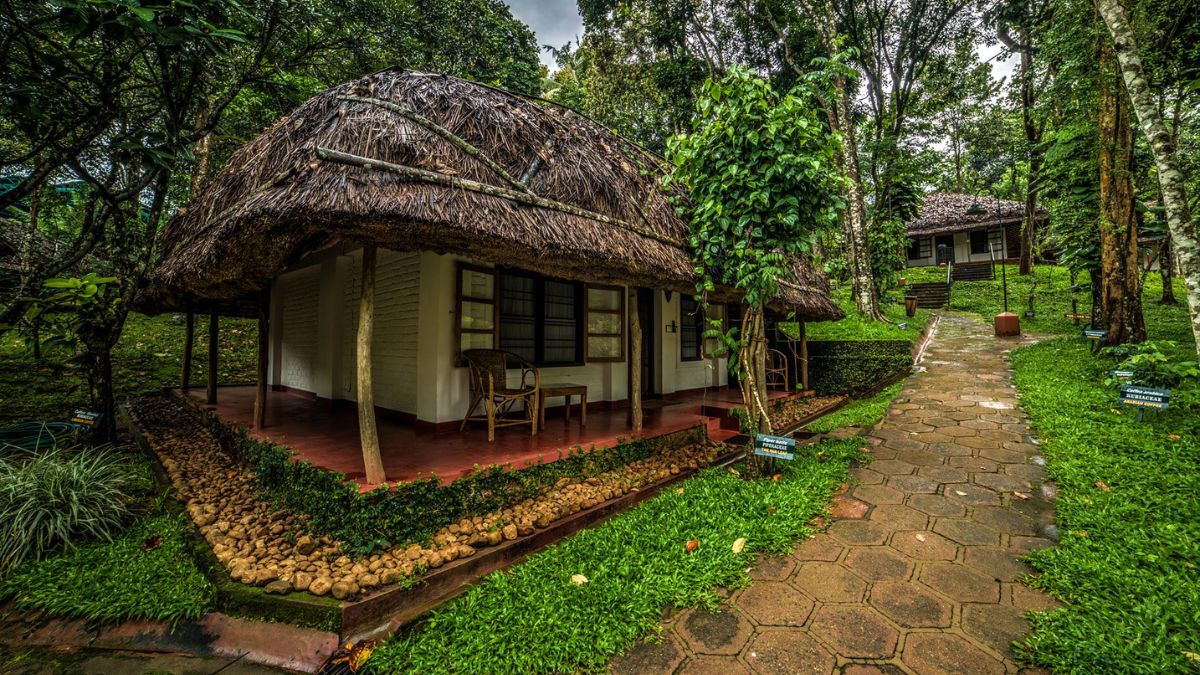
Location: Inside a restored 19th-century palace in the Palakkad district of Kerala.
This is not a spa holiday. Kalari Kovilakom is among the most structured and traditionally grounded Ayurveda retreats in India — a palace-turned-healing-centre where everything, including your diet, daily routine, and treatment schedule, is designed around classical Ayurvedic principles.
Guests are required to commit to a minimum of fourteen days. On arrival, you meet with a senior physician. The programme that follows is built around Panchakarma — the classical detoxification and rejuvenation protocol that includes therapeutic purgation, oil treatments, enemas, and nasal therapies administered in a carefully sequenced order.
The palace setting is remarkable: high-ceilinged rooms, courtyard gardens, and the sense of genuinely inhabiting a historic building rather than a themed resort. Food is freshly prepared Ayurvedic cuisine calibrated to each guest’s current programme. This is a place that takes wellness seriously enough to ask something of you in return.
Ideal for: Experienced wellness travellers seeking an authentic, medically supervised Panchakarma retreat India. Best time to visit: June to February. Suggested stay: 14 to 28 days (minimum stay enforced).
6. Shreyas Retreat — Bengaluru, Karnataka
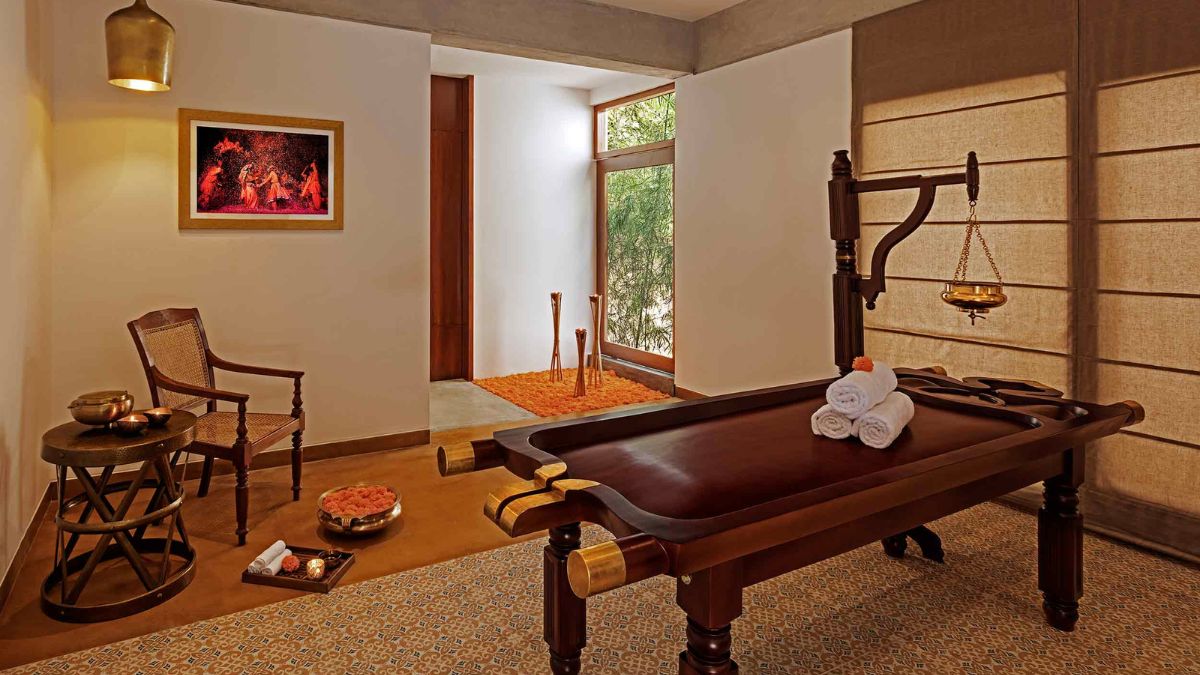
Location: About 40 km north of Bengaluru, in a rural landscape of mango orchards and open farmland.
Shreyas offers something uncommon in Indian wellness travel: a yoga-first environment within a luxury property setting. While it incorporates Ayurveda and spa therapies, its central identity is built around traditional yoga — classical asana, pranayama, meditation, and chanting — practised in a way that is accessible but not superficial.
The property has the feel of a generous private estate rather than a resort. Cottages are spacious and individually styled, set around gardens. There is a working farm that supplies much of the kitchen, and meals reflect an intelligent engagement with seasonal and Ayurvedic nutrition.
Yoga sessions are typically small — the property is not designed for large group retreats — and teachers work closely with guests to adapt the practice to their ability and goals. Ayurvedic consultations and spa treatments are available to complement the yoga programme. For travellers whose primary interest is yoga rather than medical Ayurveda, Shreyas offers one of the most refined environments in South India.
Ideal for: Yoga practitioners and those seeking a holistic wellness retreat India that foregrounds contemplative practice. Best time to visit: October to March. Suggested stay: 5 to 14 days.
7. The Oberoi Rajvilas — Jaipur, Rajasthan
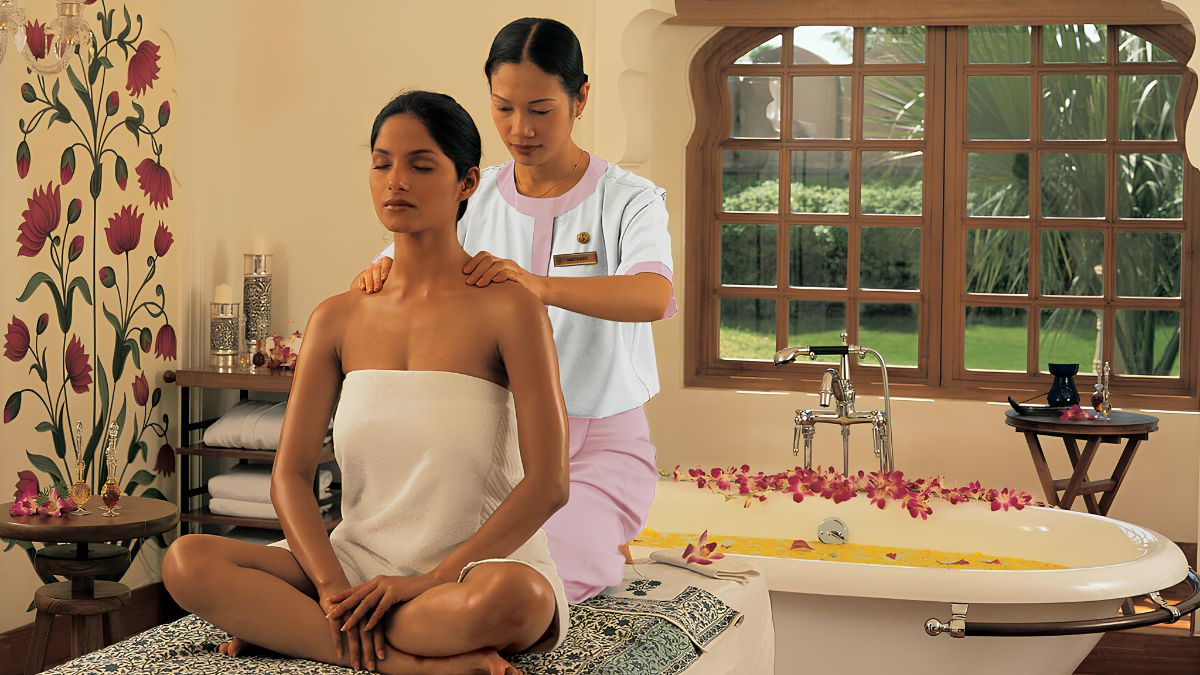
Location: Set on 32 acres in Jaipur, within a carefully constructed fort-village environment.
The Oberoi Rajvilas is not a dedicated Ayurveda retreat — it is among India’s finest luxury hotels, and its spa and wellness experience reflects that context. For travellers who want to combine Rajasthan’s extraordinary cultural landscape with a high-quality spa and wellness programme, it occupies a distinct and valuable position.
The spa offers a selection of Ayurvedic therapies, abhyanga massage, Shirodhara, and other traditional treatments alongside international spa offerings. Yoga sessions can be arranged in the gardens or in dedicated spaces within the property. The experience is more curated than clinical, which suits travellers who are on a cultural itinerary and want access to authentic wellness rather than a full medical detox.
Accommodation at Rajvilas is exceptional by any measure: tents, pool villas, and heritage suites surrounded by manicured gardens, fountains, and peacocks. Food ranges from traditional Rajasthani thali to international menus, with thoughtful options for guests following Ayurvedic dietary guidance.
Ideal for: Travellers combining Rajasthan exploration with spa and gentle wellness treatments. Best time to visit: October to March. Suggested stay: 4 to 7 days.
8. The Tamara Coorg — Madikeri, Karnataka
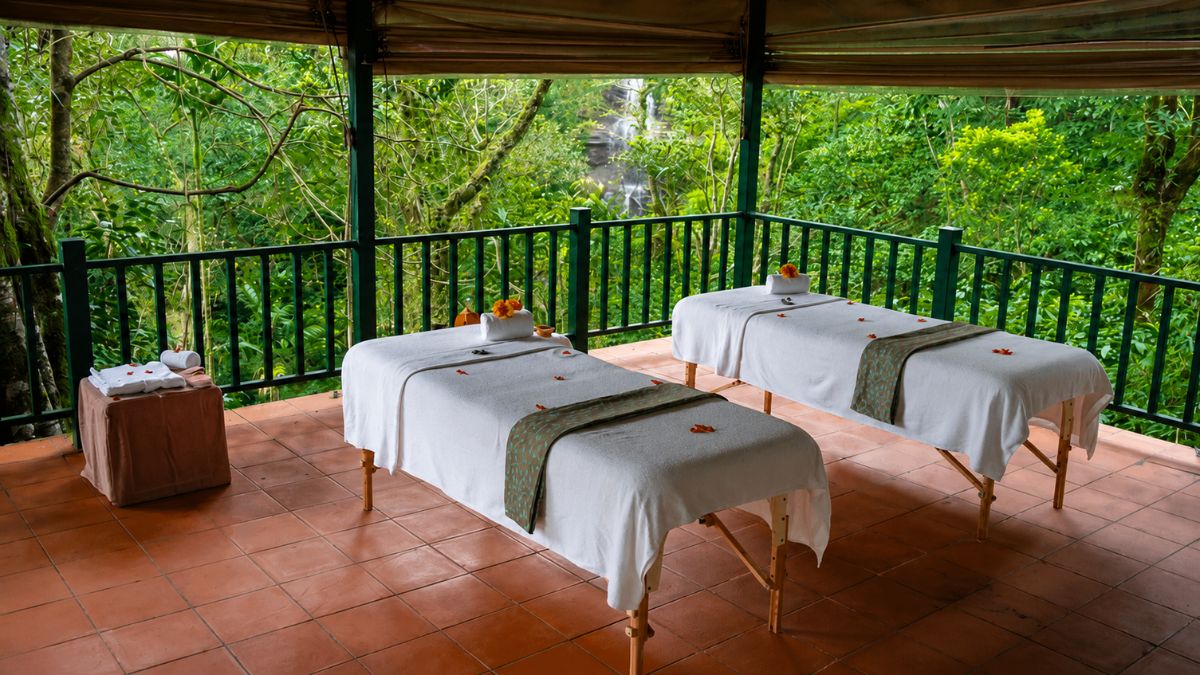
Location: Within a working coffee and spice estate in the Coorg highlands of Karnataka.
Coorg is one of India’s most atmospheric destinations — misty, green, and scented with coffee blossoms and cardamom — and The Tamara sits within it beautifully. The property integrates wellness into a setting that already feels restorative before you have opened the spa door.
The wellness centre draws on Ayurvedic principles and offers therapeutic treatments alongside nature walks, forest bathing, and farm-to-table nutrition. The approach is less intensely clinical than Kerala’s dedicated retreats, but more genuinely immersive in its natural environment than many urban luxury spa resorts.
Accommodation comprises private villas on the hillside, each with its own plunge pool and long views across the estate. The architecture respects the landscape rather than imposing on it.
Ideal for: Couples and solo travellers seeking a nature-immersive, gentle wellness experience in a culturally rich setting. Best time to visit: October to April. Suggested stay: 4 to 8 days.
9. Atmantan Wellness Centre — Mulshi, Maharashtra
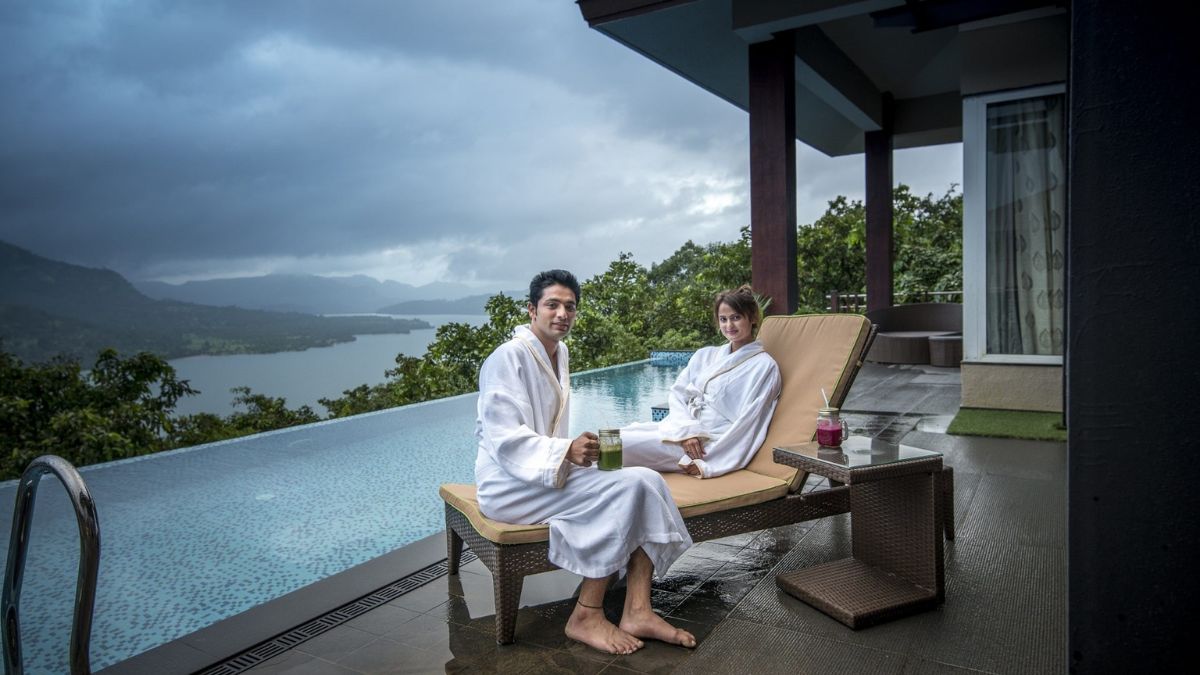
Location: On a cliff above the Mulshi Lake in the Sahyadri Mountains, roughly 45 km from Pune.
Atmantan has built a reputation as one of Western India’s most ambitious wellness destinations. It integrates Ayurveda with naturopathy, physiotherapy, nutritional science, and modern fitness — an approach that suits travellers who want a comprehensive, evidence-informed wellness programme rather than a purely traditional one.
The setting is dramatic: 42 acres on a rocky hillside above the lake, with wide skies and clean air that feels immediately different from the cities of Maharashtra. The spa facility is substantial, and the treatment list is long — but what distinguishes Atmantan is the structure behind it. Programmes are goal-oriented, whether that goal is weight management, stress recovery, detoxification, or pain relief.
Accommodation is polished and modern, with rooms and suites designed for comfort during a longer therapeutic stay. The food programme is carefully calibrated to each guest’s programme — Ayurvedic, naturopathic, or a hybrid approach.
Ideal for: Travellers from Mumbai and Pune, and international guests seeking an integrative, scientifically informed luxury wellness retreat. Best time to visit: October to February. Suggested stay: 7 to 21 days.
10. Kairali — The Ayurvedic Healing Village — Palakkad, Kerala
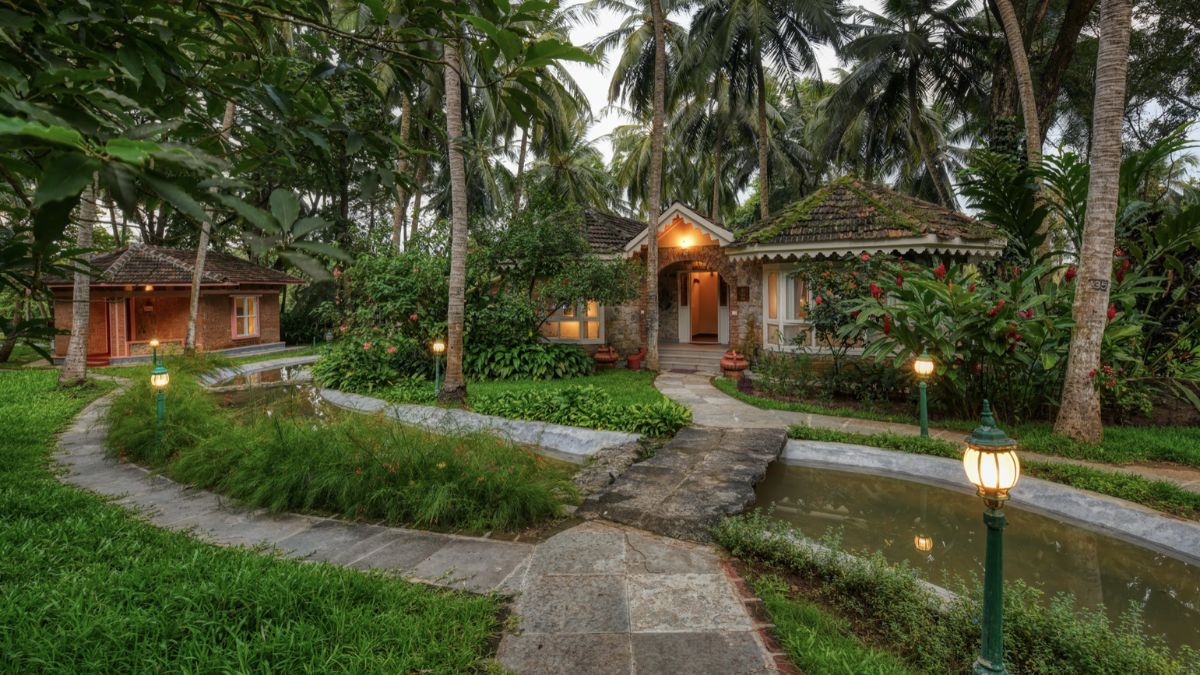
Location: In the Palakkad district of Kerala, approximately 130 km from Kochi.
Kairali is a name well known among Ayurveda practitioners and serious wellness travellers. The property has been operating for several decades and has maintained a consistent focus on classical Ayurvedic treatment within a village-style environment surrounded by medicinal gardens.
The “healing village” descriptor is apt — the property is laid out across a substantial plot with individual cottages, treatment centres, yoga halls, and organic gardens that supply both kitchen and pharmacy. Treatments are prescribed and supervised by qualified Ayurvedic physicians and encompass the full range of classical therapies, including Panchakarma, rejuvenation (Rasayana), and specific condition-focused programmes.
For travellers who want a Kerala Ayurveda resort experience that leans deeply into traditional practice without the architectural formality of some other properties, Kairali offers genuine character. It is earthy, purposeful, and well-staffed.
Ideal for: Travellers seeking traditional Ayurveda in a medically grounded village setting. Best time to visit: September to May. Suggested stay: 7 to 21 days.
How to Choose the Best Ayurveda Retreat in India
With so many options across such a geographically diverse country, the right retreat depends entirely on you — your health situation, your wellness goals, your travel preferences, and the amount of time you can commit.
Here is a practical framework for comparing your options:
Define your wellness goal first. Are you seeking deep Panchakarma detoxification? Stress relief and sleep support? A yoga-focused break? Gentle rejuvenation? Or a combination of wellness and cultural travel? The answer should guide your shortlist significantly.
Clarify the Ayurveda focus. There is a meaningful difference between a resort that offers Ayurvedic massage as a spa menu item and a retreat where every element — food, daily schedule, treatments, physician consultations — is organised around Ayurvedic principles. The latter requires more commitment from you but typically delivers more lasting results.
Consider treatment duration honestly. Classical Ayurveda, particularly Panchakarma, requires time to work. A weekend is enough to experience individual treatments, but meaningful detoxification and rejuvenation programmes traditionally span 14 to 21 days. If your schedule allows, give a longer programme serious consideration.
Evaluate the medical team. Reputable Ayurveda retreats will have resident Ayurvedic physicians (BAMS-qualified or equivalent) who conduct consultations and supervise your programme. Ask whether consultations are included or charged separately, and how many qualified doctors are on site.
Think about location and travel logistics. Kerala is the heartland of Ayurveda; Uttarakhand offers Himalayan context; Karnataka and Maharashtra are accessible from major cities. Consider what landscape and climate you want to be in during your stay.
Match the luxury level to your expectations. Some of the most medically rigorous retreats are not the most architecturally glossy. Decide whether you are prioritising therapeutic depth or a combination of wellness and hospitality excellence.
Ask about food and nutrition. At a genuine Ayurveda retreat, diet is part of the treatment. Understand what the food programme involves — many guests are surprised to find that Ayurvedic cuisine is genuinely satisfying rather than restrictive.
Budget transparently. Costs vary significantly, from mid-range properties at a few thousand rupees per night to high-end retreats where all-inclusive programmes can run to several hundred US dollars per day. Request a full breakdown including consultations, treatments, accommodation, and meals before comparing.
Best Destinations in India for Luxury Ayurveda Retreats
Kerala
Kerala is the canonical answer to the question of where to experience Ayurveda in India, and that reputation is well-earned. The state has a continuous living tradition of Ayurvedic medicine — particularly the Ashtavaidya tradition, rooted in a specific lineage of practitioner families — and a dense network of serious treatment centres. The humid tropical climate is also considered well-suited to many Panchakarma procedures. Retreats here range from beachfront properties in the south to backwater escapes and highland estates in Wayanad and Munnar.
Uttarakhand
The Himalayas provide an entirely different backdrop for wellness. Uttarakhand — home to Rishikesh, Haridwar, and the broader Garhwal region — has long been associated with yoga, meditation, and Vedic practice. Retreats here tend to integrate a more contemplative spiritual dimension alongside Ayurveda, and the mountain air and river valleys add to the restorative atmosphere.
Karnataka
Karnataka is an underrated destination for wellness travel. The Coorg highlands offer a lush, temperate environment excellent for gentle retreats. Bengaluru, despite being a major city, has several respected wellness properties within easy reach. The state’s cultural richness — ancient temples, coffee plantations, wildlife sanctuaries — makes it easy to combine wellness with meaningful travel.
Maharashtra
Mumbai and Pune’s proximity to the Sahyadri ranges has produced a growing cluster of wellness retreats aimed at urban travellers seeking a genuine break. The region is particularly accessible for domestic travellers and international visitors transiting through Mumbai, and properties like Atmantan have invested heavily in integrative wellness infrastructure.
Rajasthan
Rajasthan is not Ayurveda country in the classical sense, but for travellers combining wellness with cultural exploration, its luxury hotels offer high-quality spa experiences alongside Rajputana architecture, desert landscapes, and some of India’s most memorable cultural heritage. The wellness offering here is typically curated rather than medically intensive.
Best Time to Visit Ayurveda Retreats in India
Kerala: The period from June to November — the monsoon season — is traditionally considered excellent for Ayurveda treatments. Practitioners note that the damp, cool air opens the pores and may enhance the absorption of herbal oils. That said, the October to February window offers more comfortable weather for most international travellers and remains a strong period for Ayurveda programmes.
Uttarakhand: March to June and September to November are the most practical windows, avoiding both the intense summer heat of the plains and the winter snowfall at higher elevations. Monsoon months (July–August) can make road travel challenging.
Karnataka: October to March is comfortable in both the Coorg highlands and around Bengaluru. The Coorg monsoon, from June to September, is dramatic but may limit outdoor activities.
Maharashtra: October to February offers the most pleasant conditions in the Sahyadri region. The monsoon (June to September) is vivid but can restrict activities.
Rajasthan: October to March — before temperatures climb sharply — is the most suitable period for both wellness stays and cultural travel.
How Long Should You Stay at an Ayurveda Retreat?
Short stays (3–5 days) can offer a meaningful introduction to Ayurveda — an initial consultation, a few signature treatments, and a sense of the daily rhythm of a wellness retreat. They work well for stress relief, recharging, and experiencing individual therapies such as Abhyanga or Shirodhara. However, they are generally insufficient for deep therapeutic work.
One to two weeks (7–14 days) allows for a more structured programme. This is the minimum duration most retreat physicians recommend for programmes with a specific goal, whether that is improving sleep, managing chronic fatigue, or beginning a detox process. Within this window, you begin to feel the cumulative effect of daily treatments, dietary adjustment, and yoga or meditation practice.
Two to four weeks (14–28 days) is the traditional frame for classical Panchakarma. This duration gives physicians enough time to work through preparatory phases (Poorvakarma), the core treatments (Pradhanakarma), and the post-treatment recovery and consolidation phase (Paschatkarma). If you can commit to this duration, it typically offers the most transformative experience.
For most international travellers, a 10 to 14-day programme represents a practical balance — long enough to experience genuine change, short enough to fit within a realistic travel schedule.
Luxury Ayurveda Retreat vs Luxury Spa Resort
This distinction matters, and it is worth understanding before you book.
A luxury Ayurveda retreat is a wellness-first environment where every aspect of your stay — your daily schedule, meals, activities, and treatments — is designed around a coherent wellness philosophy and typically supervised by qualified physicians. The emphasis is on therapeutic process and outcome. You may be asked to follow specific dietary protocols, limit alcohol, maintain a sleep schedule, and commit to a programme of treatments. The experience requires participation.
A luxury spa resort is a high-end hotel or property that offers excellent spa facilities and wellness treatments as part of a broader hospitality experience. You can choose your treatments à la carte, eat from the regular restaurant menu, and structure your day as you wish. The spa experience may be superb, but it is not the organising principle of your visit.
Neither is inherently superior — they serve different purposes. If you are seeking deep therapeutic benefit from Ayurveda, a dedicated retreat is the appropriate choice. If you are on a cultural holiday and want to experience quality Ayurvedic treatments alongside the full range of a luxury hotel’s offerings, a spa resort is entirely reasonable.
The confusion arises when properties market themselves as “Ayurveda retreats” without offering the physician oversight, dietary structure, or programme depth that the term traditionally implies. When researching, ask specifically about resident doctors, consultation processes, and whether the programme is customised to you or drawn from a fixed menu.
Which Is the Best Luxury Ayurveda Retreat in India?
There is no single “best” luxury Ayurveda retreat in India — the right choice depends on your wellness goals, preferred location, budget, and how immersive an experience you seek. Ananda in the Himalayas and Vana are consistently cited for their integrative depth; Kalari Kovilakom and Kalari Rasayana are respected for traditional Ayurvedic rigour; Shreyas is well regarded for yoga-centred programmes. Research the programme structure and medical team carefully before booking.
Final Thoughts
India’s landscape of luxury Ayurveda retreats is broader and deeper than most travellers initially realise. The country’s wellness tradition is not a recent export designed for international tourism — it is a living, practised system that has been refined over centuries, and at its best it remains genuinely transformative.
The key to a successful retreat experience is matching your expectations to the right property. If you want to experience classical Panchakarma under qualified medical supervision, commit to two weeks minimum at a dedicated retreat — and prepare to fully engage with the programme rather than treating it as a backdrop. If you want a culturally rich journey with high-quality spa and Ayurvedic treatments woven through it, several excellent luxury hotels across Rajasthan, Karnataka, and Maharashtra will serve you beautifully.
Whichever direction you choose, approach the experience with openness and patience. Ayurveda works gently and systemically — it is not designed for dramatic overnight results. The travellers who return from these retreats with lasting changes are almost always those who arrived ready to slow down, follow guidance, and give the process the time it needs.
FAQ: Luxury Spa & Ayurveda Retreats in India
Which is the best Ayurveda retreat in India?
The best retreat depends on your individual wellness goals. Ananda in the Himalayas and Vana Retreat are frequently cited for their integrative and medically grounded programmes. CGH Earth Kalari Kovilakom and Kalari Rasayana in Kerala are considered among the most traditional. Shreyas in Karnataka is well regarded for yoga-focused programmes. Research the medical team, programme structure, and duration requirements before deciding.
How much does a luxury Ayurveda retreat in India cost?
Costs vary significantly depending on the property, programme, and season. Entry-level Ayurveda retreats in Kerala may start around $100–150 per day for basic accommodation and a few treatments. Mid-range retreats typically fall in the $200–400 per day range, including accommodation, meals, and a structured treatment programme. High-end retreats such as Ananda or Vana can exceed $500 per day for all-inclusive wellness programmes. Always request a comprehensive breakdown before comparing prices.
How many days are recommended for an Ayurveda retreat in India?
Most Ayurvedic physicians recommend a minimum of 7 days to experience meaningful benefit, with 14 to 21 days considered the standard for Panchakarma programmes. Short stays of 3 to 5 days can offer an introduction to individual treatments and the retreat experience, but classical detoxification and rejuvenation protocols require sustained time to work effectively.
Is Kerala the best place for Ayurveda in India?
Kerala has the most established and historically deep tradition of classical Ayurveda in India, and it remains the most recommended region for medically supervised Panchakarma retreats. However, Uttarakhand, Karnataka, and Maharashtra all offer excellent retreats with their own distinct environments and strengths. The best location for you depends on the type of experience you are seeking and your overall travel itinerary.
What is the difference between an Ayurveda retreat and a spa retreat?
An Ayurveda retreat is structured around Ayurvedic philosophy and involves physician consultations, personalised treatment programmes, dietary protocols, and often a commitment to a multi-day or multi-week programme. A spa retreat offers therapeutic treatments — which may include Ayurvedic therapies — within a hospitality-first environment, typically on an à la carte basis without the same level of medical supervision or dietary structure.
What should I expect at a Panchakarma retreat in India?
A classical Panchakarma programme typically begins with a physician consultation and a preparatory phase involving internal oil therapy (Snehapanam) and specific dietary changes. The core treatment phase introduces a sequence of therapeutic procedures that may include medicated enemas (Basti), nasal therapies (Nasyam), oil bath therapies (Pizhichil), herbal bolus massage, and other treatments prescribed for your specific condition. A recovery and consolidation phase follows. The entire process requires 14 to 21 days and involves dietary restrictions. It is a committed therapeutic programme, not a relaxation holiday.
What is the best time to visit an Ayurveda retreat in India?
It depends on the region. In Kerala, the monsoon (June to November) is traditionally considered well-suited for Ayurveda treatments, while October to February offers more comfortable weather for international travellers. In Uttarakhand, March to June and September to November are most practical. In Karnataka and Maharashtra, October to March is generally the most comfortable period for a retreat stay.